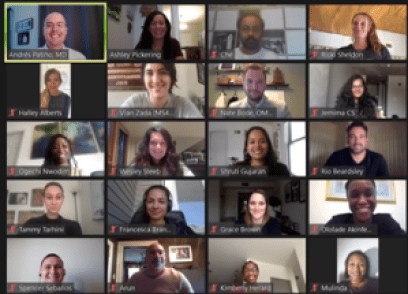
Journal Club 10-04-21 : Health Equity, Medical Tourism, and Maternal Mortality in LMICs

Welcome back! The first GEMS LP  journal club of the season took place on October 4th, 2021. During each meeting, we discuss a journal article, a global health clinical topic, and a book chapter from one of two books: An Introduction to Global Health Delivery by Joia Mukherjee or Reimagining Global Health: An Introduction by Paul Farmer, Jim Yong Kim, Arthur Kleinman, and Matthew Basilico.

The goal of journal club is to expose our mentees to fundamental global health concepts and their applications in the real world. Having a diverse cohort of participants allows for lively and engaging discussion based on each participants’ life experiences. Below is a summary of each section presented at journal club. Be sure to join us at our next meeting, taking place November 8th, 2021.

Many of the global health disparities that exist today are a result of centuries of exploitation of developing countries that can trace its roots to the slave trade. As slavery ended in the 19th century, the extraction of people was replaced with the extraction of resources as European nations divided up Africa amongst themselves. By the 20th century, centuries of exploitation had robbed newly independent countries of the resources needed to provide healthcare for their citizens. Newly liberated countries came to rely on Western monetary institutions for loans, which often came with strings attached. Loans from the World Bank and the International Monetary Fund limited the amount of public expenditures on vital healthcare infrastructure, medication, and personnel. Healthcare in developing countries was further undermined by the neoliberal policies promoted by Western countries beginning in the 1980s. Developing countries were compelled to fund healthcare through above-cost user fees, which reinforced unequal access to care and widened healthcare inequality. The neoliberal approach also championed the concept of sustainability, which focused on low-cost preventative care instead of treatment. By the 1990s, this approach had led to widening healthcare inequity between the developed and developing worlds.

An alternative approach advocated for the right to health of every individual as envisioned in the Universal Declaration of Human Rights. The 1978 Alma Ata Declaration proposed that the fulfillment of these rights belongs to the international community through international collaboration. The past several decades has seen an increasing movement towards this idea and away from one based on economics. An example of this would be the recognition in the 1990s that citizens of developing nations with HIV are inherently as deserving of treatment as those from developed nations. By taking an approach rooted in human rights, the international community was able to lower the cost of HIV medication and provide treatment for patients in the developing world.

Discussion Questions:

·Reflect on prior medical service trips you may have gone on or may be offered by your university. In what ways do these trips reflect the legacy of colonialism? How can we “de-colonize” global health in medical education? 

·Should all medical interventions in lower-income and developing countries be “sustainable”? 

Medical tourism is a modern practice in healthcare that is exacerbating global health inequity. For centuries, people of higher socioeconomic classes commonly visited higher developed countries to receive care for their medical ailments. Their journeys are much more expensive than an ordinary citizen could afford but with the advent of air travel and a rapid development of the middle class with a larger share of disposable income, many more people are travelling for medical services today than ever before. The propagation of medical tourism is exacerbating the divide in quality of care in developing countries. As private hospitals primarily attract international patients, they attract more doctors with higher salaries and benefits paid for by medical tourists’ bills. This develops a positive feedback loop that continues to neglect the care of the poorest patients who need the most advanced care and rely on public hospital systems that are already overburdened. Rather than focusing on bettering the care of public hospitals and working for the native populations, private hospital systems and governments encouraging medical systems are further dividing the health gap between socioeconomic classes and contributing to health inequity.

Discussion Questions:

What are some ethical issues developed by private healthcare systems motivated by financial incentives?

• How can medical professionals in our country educate patients about the risks of medical tourism?


Global health disparity is apparent in the care of pregnant individuals, with 94% of all maternal deaths occurring in low and lower-middle-income countries. A leading cause of maternal and perinatal mortality in these regions is hypertensive disorders of pregnancy, especially pre-eclampsia and its spectrum of diseases. Crucial to the screening and diagnosis of these disorders are regular antenatal care and assessment of risk factors, such as advanced maternal age, obesity, diabetes, and existing hypertension. For pre-eclampsia and eclampsia, the WHO has released evidence-supported recommendations for both preventative measures, such as calcium supplementation in areas with low intake, and treatment, such as using magnesium sulfate over other anticonvulsants. In low resource settings, some of the barriers that hinder the care of pregnant individuals with hypertensive disorders are a shortage of specialty-trained healthcare workers, inadequate transportation to healthcare facilities, limited antenatal care, and traditional cultural practices. While much work still needs to be done in tackling many of these challenges, especially in improving basic obstetric emergency treatment at primary community settings, innovative strategies such as task-shifting to train community health workers (CLIP initiative) in providing regular antenatal care and community cost-sharing schemes to eliminate financial barriers to obstetric care in Mali have been shown to have positive outcomes.

Discussion Questions:

· What other non-health related barriers may contribute to maternal mortality?

· What roles can emergency services/emergency medicine physicians play in improving the outcome of obstetric emergencies?

Wrap up!

As you can imagine, our mentees had a wonderful discussion surrounding these three topics! We are thrilled to be able to present a brief summary of their work here. Please stay tuned for details about our upcoming meetings, the next of which is taking place November 8th, 2021.  Connect with us through one of our contact options listed below if you are interested in attending!

Thank you to our authors and presenters!

Picture of Brian Elmore, MS4

Brian Elmore, MS4

Medical University of South Carolina

Picture of Jai Shahani, MS2

Jai Shahani, MS2

Rutgers New Jersey Medical School

Picture of Luxi Qiao, MS4

Luxi Qiao, MS4

Washington University School of Medicine

Sources:

  • Mukherjee, Joia. “Chapter 1: The Roots of Global Health Inequity.” An Introduction to Global Health Delivery: Practice, Equity, Human Rights, Oxford University Press, New York, NY, 2018.
  • Mutalib, Nur & Ming, L C & Yee, Esmee & Wong, Poh & Soh, Yee. (2016). Medical Tourism: Ethics, Risks and Benefits. Indian Journal of Pharmaceutical Education and Research. 50. 
  • 261-270. 10.5530/ijper.50.2.6.
  • http://ijper.org/sites/default/files/10.5530ijper.50.2.6.pdf
  • WHO. Maternal mortality evidence brief, 2019.
  • WHO. WHO recommendations for prevention and treatment of pre-eclampsia and eclampsia, 2011.
  • Fournier P, Dumont A, Tourigny C, Dunkley G, Drame S. Improved access to comprehensive emergency obstetric care and its effect on institutional maternal mortality in rural Mali. Bull World Health Organ 2009; 87: 30-8
  • von Dadelszen P, Vidler M, Tsigas E, Magee LA. Management of Preeclampsia in Low- and Middle-Income Countries: Lessons to Date, and Questions Arising, from the PRE-EMPT and Related Initiatives. Maternal-Fetal Medicine 2021; 3(2): 136-50.
  • Firoz T, Sanghvi H, Merialdi M, von Dadelszen P. Pre-eclampsia in low- and middle-income countries. Best Pract Res Clin Obstet Gynaecol 2011; 25: 537-48.
  • Milne F, Redman C, Walker J, et al. The pre-eclampsia community guideline (PRECOG): how to screen for and detect onset of pre-eclampsia in the community. BMJ 2005; 330: 576-80.


Keep in Touch:

[cite]

ACEP’s shiny new GEMS: the Who, What and Why that make this LP worth playing

acep gems

Introduction

The necessity of introducing emergency medicine (EM) into undergraduate medical education (here – medical school level) has been discussed, if not debated, for over four decades (1,2). More recently, two additional trends have become apparent. One speaks to the mutual co-integration and interdependence of all emergency care field components including EM (3). The other is the emergence of a keen interest in global health exhibited by both medical students and emergency medicine trainees alike (4-6).

Here we wish to present and describe a novel program for medical students that aims to address and integrate all of the three phenomena under one umbrella. 

ACEP’s Global Emergency Medicine Student Leadership Program (GEMS LP) is now in its third year, with eighteen students from various medical schools learning about topics in global health through the guidance and shared experiences of internationally minded emergency physicians.

Background

The International Section of the American College of Emergency Physicians (ACEP) is one of ACEP’s largest, with over 2600 members currently (7). In 2013 the Section’s first annual ACEP International Ambassador Conference took place in Seattle. The meeting formalized and accentuated the common vision shared by those section members who had already been actively involved in global health and international EM development in their respective nation(s) of interest (8).

In 2017 members of Emergency Medicine Resident Association (EMRA) approached ACEP’s International Ambassador Program with the idea of mentorship for medical students interested in both EM and medical work globally.

Through a collaborative effort the Ambassador Mentorship Program (AMP) was born and welcomed its inaugural class of eight medical students in 2018 (9).

Focus

To better align our name with the program’s vision, AMP was renamed the Global Emergency Medicine Student Leadership Program (GEMS LP) in 2020. Currently GEMS LP is open to medical students at all levels of training (prior to graduation) who are members of EMRA.

The nine month curriculum consists of several integral components, including global health knowledge development, research, personal mentorship and networking.

Focus on global health (GH):  GH has become a field that aims to transcend not only the borders among nations, cultures, governments and organizations, but also the distinction between what is narrowly medical and what is widely ethical and social – as in rooted in people’s daily living conditions (10). It has been a consensus among GEMS LP’s participants that efforts to improve development of EM and regional emergency care systems around the world cannot be studied or pursued outside of the global health context.

At a GEMS journal club, 2020

The program runs a structured journal club done via video platforms which includes review and discussions of textbooks and original literature pertinent to GH topics.  Since 2020, journal clubs have also included a new component where students prepare local health improvement project proposals  (based on their geographic or cultural area of interest or prior experience).  These “mock” project proposals are then discussed by the journal club group at large as another way of learning.

Examples of monthly focus themes have included global health inequity, sustainability in global health, ethics of humanitarian work, need for EM expertise in low resource settings, language justice in healthcare and the future of global health.

We welcome all members of the ACEP International Section and current GEM fellows (ask us how to get involved at infoGEMSLP@gmail.com) – international voices add much to the discussion!

Focus on mentorship and networking: Through one-on-one guided phone calls with GEMS LP faculty and other International Section physician members, students are exposed to multiple examples of individual professional paths and are offered guidance in exploring their options for future training, careers and work/life balance. Student participants also have access to globally involved EM physicians across the entire Ambassador Program and the Section, both domestically and internationally. Mentors and guest speakers have also given presentations on career paths in global EM during journal club sessions to give mentees a variety of perspectives on the diverse training and career options available.

Focus on scholarship and research: Mentors involved in academic research have had mentees collaborate in groups of 2-5 on research projects. Examples have included: state of emergency care in the post-USSR zone – a literature review, Ugandan emergency mid-level training curriculum work, a review of pre-hospital medicine in resource-restrained areas within India and Sri Lanka, assisting with the ACEP Ambassador Program Country Reports, and others.

Group projects are a great way for mentees to network and build lasting working relationships, not only with the mentor leading the project, but also with their peers. While mentees are not traveling for program projects in light of the COVID-19 pandemic, the projects are still a way in which the program helps mentees build real world skills for future GH ground work. 

Learning structure

During the course of the program each student will participate in all virtual journal clubs, and will be responsible for at least one presentation of a book chapter, an original research paper or a global health project proposal. Longitudinally, students are paired up with a faculty’s research project in small groups, and as mentioned, also participate in a minimum of three one-one-one mentorship phone or video calls with different mentors focusing on various aspects of career planning. Students may also be introduced to and connected with ACEP’s international section members based on mutual backgrounds, cultural and language skills or GH interests. Finally, students are invited to attend the annual ACEP Ambassador Conference (virtually during COVID restrictions) and are expected to attend the GEMS LP program orientation and close out sessions. 

Future directions

Mentee retention: All mentees are invited to get involved with program leadership when they graduate the program, which is a constant source of energy and new ideas. This will ensure the program’s sustainability, as we build successive generations of program leadership from the trainees who themselves benefited from the program previously.

Expanding number of students and faculty mentors: As medical student interest in GEM opportunities and mentorship increases, we hope to continue expanding the program and recruit a diverse group of mentees, including international medical students. In order to facilitate this, additional faculty members will also be needed. The program hopes to continue recruiting diverse mentors, including those from international institutions (especially those from low- and middle-income countries), humanitarian organizations, community and academic emergency departments.

Expanding the research component and publications: Giving GEMS LP participants adequate exposure to academic global emergency medicine through participation in research projects and in peer-reviewed publications. Planned publications for the 2020-2021 year include: GEMS LP milestones study and a concept paper on the program. Currently mentees are interviewing the ACEP Ambassador team working in their country or region of interest on the state of emergency medicine development. We hope to publish an EM around the world country highlights article based on these interviews. Also, be on the lookout for an EM Resident piece in the April/May issue showcasing the projects that the 2019/2020 class completed.

Connecting with other organizations: GEMS LP is actively seeking to form mutually beneficial relationships with other organizations involved with EM, emergency care and global health domestically and internationally. Currently, we are working to expand collaboration with GEM fellows.

Please get in touch if your organization would be interested in collaborating at info.GEMSLP@gmail.com!

Information sharing: The program is interested in building an information repository to share research, advice and resources that accumulate within the program over the years that are useful for medical students interested in EM and global health around the world.

Impact evaluation: To formally evaluate the impact of the GEMS LP program on participant’s careers going forward, starting with the 2020-2021 class, students will be given pre- and post- program surveys using modified methodology described by Douglass et al. in “Development of a Global Health Milestones Tool for Learners in Emergency Medicine” (11). The milestones study is planned to track participants at 1, 2, 3, 5, 7 and 10 years post-graduation from the GEMS LP program to assess long-term impact on careers.

Relevance for the global EM-trainee community

GEMS LP’s current hybrid educational model has evolved to match the diversity of our mentees with their need to simultaneously gain knowledge in several interconnected areas: emergency medicine, international emergency care systems and global health and planning one’s future career as a medical student.

We hope that the GEMS LP program may serve as a potential model for others involved in global EM education such as medical schools, residency programs, or international colleges of emergency medicine to create opportunities and resources for their students to grow into thoughtful and successful leaders in the field of global EM.

In the current era of COVID-19, this virtual program may also serve to engage students and trainees in global EM work despite limitations on travel, as well as to expand access to formal mentorship opportunities for students who may not have these opportunities at their home institutions.

For more information on GEMS LP and how you can get involved as a mentor, mentee, or a journal club participant please visit the page below or email us!

https://www.emra.org/be-involved/committees/international-committee/amp-program-info/

The 2021/22 GEMS LP application will open for students this spring, with a deadline of June 30, 2021. We are always recruiting faculty mentors! 

Cite this article as: Anthony Rodigin, Stephanie Garbern, Ashley Pickering, Alexandra Digenakis, Elizabeth DeVos, Jerry Oommen, “ACEP’s shiny new GEMS: the Who, What and Why that make this LP worth playing,” in International Emergency Medicine Education Project, February 21, 2021, https://iem-student.org/?p=17057, date accessed: February 21, 2021

References:

  1. Guidelines for Undergraduate Education in Emergency Medicine. Ann Emerg Med. 2016 Jul;68(1):150. doi: 10.1016/j.annemergmed.2016.04.049. PMID: 27343670.
  2. Beyene T, Tupesis JP, Azazh A. Attitude of interns towards implementation and contribution of undergraduate Emergency Medicine training: Experience of an Ethiopian Medical School. Afr J Emerg Med. 2017 Sep;7(3):108-112. doi: 10.1016/j.afjem.2017.04.008. Epub 2017 Apr 20. Erratum in: Afr J Emerg Med. 2017 Dec;7(4):189. PMID: 30456120; PMCID: PMC6234139.
  3. Carlson LC, Reynolds TA, Wallis LA, Calvello Hynes EJ. Reconceptualizing the role of emergency care in the context of global healthcare delivery. Health Policy Plan. 2019 Feb 1;34(1):78-82. doi: 10.1093/heapol/czy111. PMID: 30689851
  4. Havryliuk, Tatiana et al. Global Health Education in Emergency Medicine Residency Programs. Journal of Emergency Medicine, Volume 46, Issue 6, 847 – 852. March 7, 2014.
  5. Dey CC, Grabowski JG, Gebreyes K, et al. Influence of international emergency medicine opportunities on residency program selection. Acad Emerg Med 2002;9:679–83.
  6. Cox JT, Kironji AG, Edwardson J, Moran D, Aluri J, Carroll B, Warren N, Chen CCG. Global Health Career Interest among Medical and Nursing Students: Survey and Analysis. Ann Glob Health. 2017 May-Aug;83(3-4):588-595. doi: 10.1016/j.aogh.2017.07.002. Epub 2017 Aug 30. PMID: 29221533.
  7. http://www.acep.org; Search: “International Membership FAQs”. Accessed 1/16/21
  8. https://www.acep.org/globalassets/sites/intl/media/site-documents/1st-annual-acep-international-ambassador-conference-proceedings.pdf. Accessed 1/16/21.
  9. Patino, Andres. “GEMS LP – Global EM Student Leadership Program. The New AMP”. GEMS LP Program Orientation virtual meeting, PPT presentation. October, 2020.
  10. Cemma, Marija. “What’s the Difference? Global Health defined”. Global Health NOW. Sept. 26, 2017. https://www.globalhealthnow.org/2017-09/whats-difference-global-health-defined. Accessed 1/16/21.
  11. Douglass KA, Jacquet GA, Hayward AS, Dreifuss BA, Tupesis JP, Acerra J, Bloem C, Brenner J, DeVos E, Douglass K, Dreifuss B, Hayward AS, Hilbert SL, Jacquet GA, Lin J, Muck A, Nasser S, Oteng R, Powell NN, Rybarczyk MM, Schmidt J, Svenson J, Tupesis JP, Yoder K. Development of a Global Health Milestones Tool for Learners in Emergency Medicine: A Pilot Project. AEM Educ Train. 2017 Sep 11;1(4):269-279. doi: 10.1002/aet2.10046. PMID: 30051044; PMCID: PMC6001724.

A place for covoptimism?

Whether you are an optimist, a pessimist, or a strict realist is likely to impact how you would project potential effects of COVID on the post-COVID world.

I would argue that from the medical-practical perspective, the three attitudes above are not mutually exclusive. As we often conclude when reading pro- and con- arguments for a new legislature, unrefined reality allows for enough mixed data and scattered observations upon which to base and justify either stance.

My approach here is more of realistic anticipation: what changes to our global emergency care practice environment may result from what we are experiencing today? Undoubtedly, such changes will affect trainees a lot more than seasoned EM providers.

Telemedicine

While by no means a new thing, Telemedicine has advanced exponentially over the last few months and has come to the forefront of medical care in terms of its scope, breadth, and practical applications.

I am what my spouse would call “technologically challenged” (if she were to put it kindly). Yet even a tech-doofus (me) has had to dabble in Telehealth over the last few weeks – both inside my ED and to reach patients thousands of miles away.

Local Resource Preparedness

Everyone now realizes that you need to have tucked away but keep readily available roughly two N-95 masks per healthcare worker per day for three hundred and sixty-five days, amen.

Which changes in how entire healthcare systems are financed are necessary is a huge comprehensive topic. But point-preparedness, as in being ready at the actual place where you and I live and work locally, is a much easier thing to wrap our heads around and become directly involved in.

Provider Cross-Training

I do not know if golf practice makes you better at playing basketball or swimming at karate. But I do know that we have become so specialized, it is almost like there are hand specialists nowadays who will only deal with the left index finger.

COVID has shown all of us that it is not helpful to only possess knowledge and skills within the comfort zone of your specialty or sub-specialty.

As an EM doc, I have been okay with my ventilator and ARDS management skills. But the last few weeks have been extraordinary in reading up on anything from the forgotten basics of epidemiology and virology to palliative care. And that’s a good habit of keeping up for the future.

Sorting Out The Trash In Medical Literature

It is one thing to be able to verbally shred a New England or a Lancet paper at a leisurely journal club; it is quite another to be able to apply new (or old) reported research to clinical practice without harming anyone.

In the times of YouTube anxieties and misinformation, the latter task becomes even more crucial yet difficult. COVID controversies ranging from antimalarials to early intubation are a prime example.

But the good news with COVID is that I think we have just been handed the requirement for a free refresher course on how to appraise medical literature critically. We have to do this under pressure, without much time, and, arguably, fighting with our own natural inclination that “to do something is better than doing nothing.”

Patient Privacy and Empty EDs - As They Were Intended?

These points are controversial. But with medical information privacy requirements being loosened in many locations and with fewer non-COVID patients going to EDs, it is a valid question to ask: is right now how things should have always been?

Whether certain patients do not belong to an ED is a complex topic. Finding the golden middle between protecting confidential patient information and enabling providers to reach and treat patients most efficiently is likewise easier said than done.

For now, I am just inviting you to think about it.

Viruses In Focus

After decades and billions poured into research, we finally have stuff against HIV. Hepatitis and the herpes families are the two runners up, plus we developed a few effective vaccines like the MMR – but that’s about it really.

So much time and focus have gone into killing bacteria, we have somewhat neglected the other big guy. Until now.

The Cure For The Common Burnout

Emotional exhaustion may indeed be the key factor in professional burnout for emergency care providers. But other factors contribute as well – including feeling unappreciated or not needed, and work seems routine and mundane.

We now have COVID, which has reignited the fire for many EM providers, no matter how deep are those post-N95 facial marks. Otherwise, why would one fly to New York or elsewhere right now “to help”?

Frontline medicine certainly takes its toll on you. But hardly anyone in our specialty should feel not needed or unappreciated anymore.

The few changes I have listed come from a very long list. Whether they will prove to be overwhelmingly positive remains to be seen. Of course, future benefits do not negate the tremendous harm and suffering the pandemic has already brought and will continue to bring in the months to come.

But one thing is for sure: COVID is not the last time we are dealing with something like this. What your attitude and knowledge will be then, is up to you.

[cite]

Why Me? The Story of My Burnout – Part 3

Why Me? The Story of My Burnout - Part 3

The story continues from link (Part 2).

I must take a deep breath. I must ask for help.

The Self-Knowledge Path

I could go away and work in another hospital. We have many good hospitals in Brazil. Some even employ emergency physicians who are local graduates. I really could. In truth, there would be no shame if I left the hospital. But I decided to give it one more try.

I just want to make clear that there is no single route back from burnout. It is a multifactorial treatment. You need emotional power. Some you may already have, or you can develop with a mental health specialist’s help. Some you will gather alone, or family and friends will help you to recover if you are lucky enough. Read, talk, discuss, and share with your community. You will never be alone because it is the system that is inflicting moral injury and burning you, and everybody, out.

Each person needs different means and tools to recover. We have to acknowledge that not everybody can afford all of them. Not everybody can pay for a therapist or even leave their work. I was one of the lucky ones. I could.

I promised myself and others that I would get better, and I wouldn’t give up. I felt obliged to improve the system that had harmed me. The system that made me afraid; afraid that I would fail.

It was not easy! It wasn’t “just not thinking about it.” It wasn’t “just a phase.” It wasn’t “just yoga.” It wasn’t “just wanting.” It was more than all the above. It took a long journey of self-knowledge: Who was I? What did I want? How could I achieve that?

Gradually, intertwined with relapses,​ the healing process began. I returned to therapy. Thanks to all support from my amazing friends, -virtual friends, present friends, distant friends- mentors, mentees, students, residents, followers, I was overwhelmed with affection and understanding. There were messages of encouragement everywhere I looked and listened. I did not plan this. It happened organically from across our community, and sometimes unintentionally, as I reached out to others, who always found time to help me.

Kindness can save a life! If you feel so, just go around saying how important people are in your life. I assure you that the kindness and positive comments of these people saved me.

I improved gradually in small steps. With empathy and determination, I took one step after another. Each step led me to find new perspectives. With each small victory​, I felt a small but important​ celebration in my heart​. ​

Yet, I wanted to make sense of it all. How to endure the moral injury? How to continue working here? I desperately needed to make sense of my job.

Why Me?

jule santos

In addition to therapy, I went on leave. I flew away and spent time in Mozambique, an LMIC, with many more difficulties, compared to Brazil. They were just beginning to develop the first emergency medicine residency program, and they had a lot more work to do. They were seemingly starting from scratch, and they had fewer resources than we had in Brazil. I found their enthusiasm and resourcefulness more inspiring than I thought possible.

It wasn’t because I could see how lucky we are in Brazil, but they did their best even though they were aware of their problems. I knew that there was no way that I could give up after seeing them.

I returned to Brazil, where people were eager to work with me. I felt they had missed me. They showed me that I made a difference.

I was fortunate to see my work environment improved. The administration had started to ‘get it,’ and now they cared about what we do. They realized that efficient systems saved money, so they were helping us achieve better care for our patients. Our department was renovated. They hired more people, and we got better medications. It all helped. It felt as though they were listening.

So recovering from burnout not only helped me to accept that problems are a part of the system but also made me realize people make the system. Therefore we can change it to accommodate our needs. Not the contrary. We need to END moral injury by addressing it and demanding solutions! We don’t need to be resilient to it!

In the beginning, I understood that I needed to be ​present​ in all my tasks, but that’s a challenge in the hectic world of emergency medicine. In truth, we are not as good at multitasking as we let ourselves think. However, we get better at prioritizing and scheduling tasks as we develop as clinicians. More importantly, we learn to give each task the proper time and attention it deserves.

As time passed, my most challenging feelings diminished. I redefined my responsibilities and my choices, redefined my motivation, my ambition, my purpose. I adjusted my expectations. I found a new power.

Then, ​gradually​, the love for Emergency Medicine and the energy to become the doctor I aspire came back. However, I still had to face my demons and deal with the most painful side of emergency medicine: Delivering bad news.

“Most of the time, the fact that you care is enough”​ is one of the most effective pieces of advice that I ever received. It helped me relieve the intense pain that I didn’t even know it was there. I still remind others and myself of it regularly.

For example, I dealt with the tragic case of pediatric cardiac arrest, brought in by another medical team. We did CPR over an hour, as this was a very delicate situation with a child. At the debriefing, I was careful with both teams from the other hospital and our own. Although I was worried about having the conversation I did, I was shocked and stunned to hear the reply. The doctor shrugged and said:

– Yeah, right. Can I go now?

He was in a rush. He didn’t even want to hear the debriefing. He didn’t appear to care! The disdain broke my spirit, and the whole team felt the same anger. It made everything harder to cope.

I took a deep breath, thanked the team for all the effort, asked them to prepare the body, and went to the waiting room to talk once again with the father. I had been there a lot of times, talking through everything as we were trying to resuscitate, so he already knew me, and immediately recognized my expression of bad news. I sat next to him and told him everything we did. I was trying to remedy the anguish while allowing time for understanding.

– There was nothing more we could do. I’m so sorry, but he died.

The father stared at the floor for a while.

– My wife is eight months pregnant. What should I do now?

He was in despair. Next came tears. I waited. Present. Then, he looked at me with honest:

– Thank you, doctor, for everything you did.

I will never forget them.

“Most of the time, the fact that you care is enough.”

I can’t stop people from getting sick. I can’t even guarantee who will survive, much less, meet the expectations of families. I can’t fix all the system by myself. Yet, I can show that we care, which is now my purpose and mantra.

Now, when I have to deliver bad news, I try my best to be there and look in the eyes. I patiently wait to make sure until there is no doubt. I don’t try to hide my feelings, ​and I finally feel I’m always telling the truth:

– We are doing everything we can.

I ensure that they know​ we care.​ I make a difference there. My pain eases as theirs alleviates even a little.

“Most of the time, the fact that you care is enough.”

I can’t stop people from getting sick. I can’t even guarantee who will survive, much less, meet the expectations of families. I can’t fix all the system by myself. Yet, I can show that we care, which is now my purpose and mantra.

Finding My Ikigai

ikigai

Ikigai is a Japanese concept that means “a reason for being.” In English, the word roughly means “thing that you live for” or “the reason for which you wake up in the morning.” Each individual’s ikigai is personal and specific to their lives, ​values​ , and ​beliefs​. It reflects the ​inner self​ and faithfully expresses that, while simultaneously creating a mental state​ in which the individual feels at ease.

The thing I like most about ikigai is that it is for everyone. You have to understand yourself to achieve this deeply. Seeking self-knowledge can be the most challenging part.

– Am I doing something that I love?
– Am I doing something that the world needs?
– Am I doing something that I am good at?
– Am I doing something that I can be paid for?

YES!

So, where am I now?

Well, I still love heart attacks! I love the look of amazement of the interns when we save a life. I love the self-satisfaction of the residents when they can do something correctly for the first time. I love how happy the team gets when we can do perfect resuscitation. I love the peculiarities of each patient, their life, culture, and beliefs. I love to learn something new every day. ​And that’s why Emergency Medicine!

I love heart attacks! But when we can't save, when the system fails, when the patient dies but I feel that I softened the pain, even a little bit, by showing that we care, I know I can endure.

And that's why, me.

[cite]

Why Me? The Story of My Burnout – Part 2

Why Me? The Story of My Burnout - Part 2

The story continues from link (Part 1)

I had already been tired and sad. Now, I was also feeling wronged.

The Dangers of Burnout

It meant that heart attacks stopped being exciting. I started to resent them as they now caused me to suffer. I have nowhere else to refer the patient, or the specialty doctors criticized me. 

They mistreated me, perhaps because of a lack of trust, or they too were damaged by the system. Maybe it was about payments and expenses. I did not know, but the effort of constant fighting was exhausting.

The system hit me hard. It was clear: irritation, stress, discontent, three quarrels with my team and my superiors in one week. I was burned out. That was putting my good work at risk.

Sad person

I felt like everything I was doing was meaningless. I aspired to become the best possible doctor through studying, traveling and sharing, but I always returned to the conditions that made me feel that all was in vain. My stagnant environment was full of burnout people, unjust deaths and endless problems regarding insufficient resources versus higher and higher demand.

That saddest thing in medicine is a doctor without hope.

I felt that each patient brought more pain than joy, even when we had excellent outcomes. It made me sick. I felt like I had unlearned hope. To make matters worse, I could not contain these emotions.

One day a patient asked me, “Am I going to die, doctor?”

I had just seen the results. It suggested cancer, but what would happen now? We wanted an expert to lead him, necessitating an evaluation by the oncologist. Still, the oncologist would not see the patient until the biopsy result, despite the imaging strongly suggested cancer. That meant we had to ask the general surgeon to do the biopsy, but in return, he asked us to refer the patient to another surgical specialty, based on the location of the tumor. So we tried, but this type of specialist did not serve in our region.

The patient’s and our growing stress and conflict eventually led the general surgeon to do the biopsy, but the patient had to wait 30 to 45 more days for the result. Only then, he would be able to go back to the oncologist. When he did, tho oncologist asked us for phenotyping. One more week passed until we finally get the patient to oncology, only to be declared too sick for treatment.

I had experienced this so many times before. Meanwhile, patients were getting more sick, and repeatedly ended up in the emergency department, sometimes got admitted, only to treat infections or pain. In the end, they were sent by the internist to die in our emergency room. They could not do end-of-life care properly. I frequently talked to an enraged family, not because of cancer, but because they were led to believe there was a chance of treatment.

My opinion is that the problem wasn’t lying to the patient about cure cancer, but how often the system don’t even give them this chance of a fight, lying about a chance to treat, but in really being just harmful for everybody because disorganization, corruption, and for didn’t care.

We do not cure death. Ever.

Sometimes we can prolong life. We hope for a good life with meaning, so that they can enjoy some more years, months, weeks or days of celebration, and prepare their wishes for a decent death with their family.

My opinion is that this realization is important not only when we talk about cancer, but any condition, even like a heart attack. We do not cure death, ever.

Coming back to that new patient, the words and the questions bounced in my head:

– Am I going to die, doctor?
– Don’t think about it now. We will take care of you.

I don’t know what the patient saw in me. To me, It felt like lying. When I said we would do our best, it wasn’t me but the system lying. Even if we as emergency physicians or I as an individual did everything possible, I felt the system didn’t care. I knew the system could do better. What could I say when I knew that the journey I want for my patients is so unachievable in the system I work in. I no longer knew what to say under these circumstances, and I felt the patient recognized that in my soul.

I felt hurt, guilty, beaten, and bitter.

That saddest thing in medicine is a doctor without hope.

I never thought this could happen to me. Not with me! How could this happen to me? I was in love with Emergency Medicine! Wasn’t I?

I’d said a billion times how I loved Emergency Medicine and didn’t know how to live without it. I’d shared my passion, convincing others that Emergency Medicine was the answer. Now, it felt like Emergency Medicine was killing me. And worst, I felt that I was not doing good for my patients as my lies were hurting them.

I must take a deep breath. I must ask for help. ...to be continued...

[cite]

My Road to Emergency Medicine

Helene Morakis

MS4 at Queen’s School of Medicine

Incoming EM resident at the University of British Columbia

My first shadowing exposure to clinical medicine was in Pediatric Emergency Medicine (EM). Before starting medical school, I lifeguarded during my studies. Over six years, I had sent a handful of children to the Pediatric Emergency Department (ED) and always wondered what happened to them. I expected the shadowing experience to be chaotic and stressful.

The supervising physician shattered all my preconceived stereotypes about emergency medicine: she listened empathetically to patients and their parents, she took the time to teach her timid mob of medical learners and she managed to stay calm while juggling multiple cases of varying acuity. I left that shift – and all of my subsequent adult and peds EM shadowing shifts – in awe. I wanted to be part of this group of skilled physicians that made meaningful short connections with patients and was eager to tackle any case that came through the door.

I wanted to be part of this group of skilled physicians that made meaningful short connections with patients.

While in medical school I found I also loved the collaborative setting, the fast pace and the challenging contrast between cases in EM. My first two EM clerkship shifts entailed performing CPR, providing patient education in English, French and Spanish (and kicking myself for not learning at least three more languages!), ruling out a stroke in a non-verbal patient, and suturing a laceration after an assault. I was hooked. The opportunity to care for patients during their most difficult moments solidified my passion for Emergency Medicine. I love the “anyone, anything, anytime” mantra shared across ED’s that I visited on electives.

The opportunity to care for patients during their most difficult moments solidified my passion.

ANY

One
Thing
Time

EM is a broad and flexible field

Being fascinated by healthcare delivery in diverse settings and motivated by social justice I was interested particularly in Global Health and Wilderness Medicine in my pre-clinical years before dedicating myself to EM. Luckily, EM is a broad and flexible field and allows me to combine all of these interests.

I have been particularly interested in the online community that is working to advance EM and recruit medical students to the growing specialty on an international scale. Learning from and contributing to projects such as iEM is motivating and I am energized by like-minded medical learners around the world. My passion outside of school in the past two years has been working with the International Student Association of Emergency Medicine.

EM community is the best!

I may be biased, but I think the EM community is the best! There is an incredibly dynamic and well-established online presence that I have found very welcoming. Along with learning tips and tricks from FOAMed gurus, I had the opportunity to reflect on the EM mindset and social issues with the FemInEM community. Going to the FemInEM Idea Exchange 2018 (FIX18) conference last year in NYC as a student ambassador was an incredible experience and made me motivated to continue connecting with like-minded EM colleagues online.

Shana Zucker medical student, LGBTQIA+ advocate, at the FIX18 conference presenting her Queericulum

When I’m not in the hospital, I like to play outside. Participating in Wilderness Medicine allows me to do so even more and I like to think about how to deliver healthcare in non-hospital environments. I love that I can continue pursuing this passion through EM. The Wilderness Medical Society (WMS) has conferences, courses and research opportunities for medical students. I am working on my Fellowship of the Academy of Wilderness Medicine (FAWM) and hoping to gain more on the ground experience and contribute to research in this field as I move through my career!

When I’m not in the hospital, I like to play outside.

Hiking King’s Throne in Kluane National Park, YT, Canada, between EM shifts in Whitehorse, YT

The excitement and variety continue after shifts in EM. Between the online medical education community, on-shift teaching, research opportunities, the world of simulation and the interdisciplinary applications of EM, it is a specialty that academically has a lot of opportunities. Shift work is challenging, but offers flexibility to pursue my hobbies outside of work. There is a general culture of work-life integration and promotion of wellness shared among emergency physicians. At my home school program, Queen’s Department of Emergency Medicine, I saw this reflected in the resident and faculty mindsets and it contributed to my own prioritization of my wellness.

EM is a specialty that academically has a lot of opportunities.

The best advice I have received about choosing a specialty has been to follow my passions. The road to EM has been a fun adventure and has given me plenty of opportunities to do so. I am excited to start residency at the University of British Columbia. With teaching opportunities, unique pathology and a high volume of trauma, the residency at Vancouver General Hospital will be a busy but incredible ride.

Vancouver, BC, Canada

I look forward to pursuing my outdoor interests and enjoying urban amenities in Vancouver between shifts. With faculty and resident involvement in Wilderness Medicine and Global EM, I see many fun opportunities lying ahead!

If you liked this story, you may like these too!

[cite]