Understanding Authorship

Understanding Authorship

In this educational series, iEM Education Project interviewed Prof. Fikri Abu-Zidan, a world-renowned expert and researcher on trauma, POCUS, and disaster management. He shares his 40 years of experience as a clinical researcher with the young generation of doctors.

The series name is FUNDAMENTALS OF RESEARCH IN MEDICINE and will include various aspects of research. We hope you will enjoy listening to the advice of Prof. Abu-Zidan.

The 3rd episode is “Understanding Authorship”

Professor Fikri Abu-Zidan, the head of the Trauma Group at United Arab Emirates University, is an Acute Care Surgeon who graduated (MD) from Aleppo University (Syria) in 1981 and was awarded the FRCS, Glasgow, Scotland in 1987.  He achieved his PhD in Trauma and Disaster Medicine from Linkoping University (Sweden) in 1995 and obtained his Postgraduate Diploma of Applied Statistics from Massey University (New Zealand) (1999). His clinical experience included treating war injured patients during the Second Gulf War (1990). He has been promoting the use of Point-of-Care Ultrasound (POCUS) for more than thirty years in which he is a World Leader. Furthermore, he is an international expert on trauma experimental methodology developing novel clinically relevant animal models. Establishing experimental surgical research in Auckland University, New Zealand, has led to a strong successful PhD Program.  

He has made major contributions to trauma management, education and research in Kuwait, Sweden, New Zealand, Australia and UAE.  He authored more than 415 publications, presented more than 600 invited lectures and abstracts, and received more than 40 national and international awards. He is serving as the Statistics Editor of World Journal of Emergency Surgery and European Journal of Trauma and Emergency Surgery. 

[cite]

What you should know before your first ED shift

what you should know before your first ED shift

In this episode of Coffee Chat With Emergency Medicine Experts, we discussed thing you should know before your first emergency department shift. Dr. Ana Paula Freitas, Dr. Gregor Prosen, Dr. Joe Bonney and Dr. Rasha Buhumaid were the guest speakers of this episode. Dr. Dr. Arif Alper Cevik was the hosts of this session.

Dr. Ana Paula Freitas, Dr. Gregor Prosen, Dr. Joe Bonney and Dr. Rasha Buhumaid shared their experiences and lessons learned during their career. We believe medical students and junior EM trainees can learn many from this episode.

Want More on ED shift work?

what you should know before your first ED shift
iEM Education Project Team

In this episode of Coffee Chat With Emergency Medicine Experts, we discussed thing you should know before your first emergency department shift. Dr. Ana Paula

Read More »
sleep and shiftwork
Brenda Varriano, Canada

The emergency department is open 24/7, meaning that most ED physicians experience shift work. Shift work means that service is provided around the clock, whether

Read More »
Things You Should Know Before Your First ED Shift
Ibrahim Sarbay, Turkey

I recently posted a question to the Twitterverse: “Imagine that an Emergency Medicine intern asked you for advice before his/her FIRST SHIFT. What would be

Read More »

Practicing ethically in research

Fundamentals of Research in Medicine - Episode 2

In this educational series, iEM Education Project interviewed Prof. Fikri Abu-Zidan, a world-renowned expert and researcher on trauma, POCUS, and disaster management. He shares his 40 years of experience as a clinical researcher with the young generation of doctors.

The series name is FUNDAMENTALS OF RESEARCH IN MEDICINE and will include various aspects of research. We hope you will enjoy listening to the advice of Prof. Abu-Zidan.

The 2nd episode is “Practicing ethically in research.”

Professor Fikri Abu-Zidan, the head of the Trauma Group at United Arab Emirates University, is an Acute Care Surgeon who graduated (MD) from Aleppo University (Syria) in 1981 and was awarded the FRCS, Glasgow, Scotland in 1987.  He achieved his PhD in Trauma and Disaster Medicine from Linkoping University (Sweden) in 1995 and obtained his Postgraduate Diploma of Applied Statistics from Massey University (New Zealand) (1999). His clinical experience included treating war injured patients during the Second Gulf War (1990). He has been promoting the use of Point-of-Care Ultrasound (POCUS) for more than thirty years in which he is a World Leader. Furthermore, he is an international expert on trauma experimental methodology developing novel clinically relevant animal models. Establishing experimental surgical research in Auckland University, New Zealand, has led to a strong successful PhD Program.  

He has made major contributions to trauma management, education and research in Kuwait, Sweden, New Zealand, Australia and UAE.  He authored more than 415 publications, presented more than 600 invited lectures and abstracts, and received more than 40 national and international awards. He is serving as the Statistics Editor of World Journal of Emergency Surgery and European Journal of Trauma and Emergency Surgery. 

[cite]

Things you should know about wellness and emergency medicine

things you should know about wellness and emergency medicine

In this episode of Coffee Chat With Emergency Medicine Experts, we discussed wellness and emergency medicine for medical students. Dr. Tracy Sanson, Dr. Al’ai Alvarez were the guest speakers of this episode. Dr. Janis Tupesis and Dr. Arif Alper Cevik were the co-hosts of this unique session.

Dr. Sanson and Dr. Alvarez shared their experiences and lessons learned during their career. We believe medical students and junior EM trainees can learn many from this episode.

Want More on Wellness?

burnout
Brenda Varriano, Canada

Author: Brenda Varriano Guest Author: Jason M White What is Burnout? Most of us have experienced some component of Burnout in one shape or another.

Read More »
things you should know about wellness and emergency medicine
iEM Education Project Team

In this episode of Coffee Chat With Emergency Medicine Experts, we discussed wellness and emergency medicine for medical students. Dr. Tracy Sanson, Dr. Al’ai Alvarez

Read More »
Coping with an Emotional Crisis
Sheza Qayyum, Canada

In the ED, we often see patients presenting amid an emotional crisis – whether it’s a panic attack, or a period of extreme anxiety or

Read More »
Who Takes Care of You While You Take Care of Others
Arthur Martins, Brasil

The COVID-19 Pandemic has changed our lives in so many ways that sometimes it is difficult to remember how life was without all these changes.

Read More »
Why Me? The Story of My Burnout - Part 3
Jule Santos, Brasil

The story continues from link (Part 2). I must take a deep breath. I must ask for help. The Self-Knowledge Path I could go away

Read More »
Why Me? The Story of My Burnout - Part 2
Jule Santos, Brasil

The story continues from link (Part 1) I had already been tired and sad. Now, I was also feeling wronged. The Dangers of Burnout It meant

Read More »
[cite]

What makes a physician a good researcher

Fundamentals of Research in Medicine - Episode 1

In this educational series, iEM Education Project interviewed Prof. Fikri Abu-Zidan, a world-renowned expert and researcher on trauma, POCUS, and disaster management. He shares his 40 years of experience as a clinical researcher with the young generation of doctors.

The series name is FUNDAMENTALS OF RESEARCH IN MEDICINE and will include various aspects of research. We hope you will enjoy listening to the advice of Prof. Abu-Zidan.

The first episode is “What makes a doctor a good researcher.”

Professor Fikri Abu-Zidan, the head of the Trauma Group at United Arab Emirates University, is an Acute Care Surgeon who graduated (MD) from Aleppo University (Syria) in 1981 and was awarded the FRCS, Glasgow, Scotland in 1987.  He achieved his PhD in Trauma and Disaster Medicine from Linkoping University (Sweden) in 1995 and obtained his Postgraduate Diploma of Applied Statistics from Massey University (New Zealand) (1999). His clinical experience included treating war injured patients during the Second Gulf War (1990). He has been promoting the use of Point-of-Care Ultrasound (POCUS) for more than thirty years in which he is a World Leader. Furthermore, he is an international expert on trauma experimental methodology developing novel clinically relevant animal models. Establishing experimental surgical research in Auckland University, New Zealand, has led to a strong successful PhD Program.  

He has made major contributions to trauma management, education and research in Kuwait, Sweden, New Zealand, Australia and UAE.  He authored more than 415 publications, presented more than 600 invited lectures and abstracts, and received more than 40 national and international awards. He is serving as the Statistics Editor of World Journal of Emergency Surgery and European Journal of Trauma and Emergency Surgery. 

[cite]

The Case of the Perplexing Crepitations

perplexing crepitations

Occam’s Razor – the simplest explanation is most likely to be correct.

In the Emergency Room, we are faced with a multitude of cases, and Occam’s Razor serves best when we need to narrow down on the differential diagnoses.

Sometimes, a few cases may evade this category and continue to baffle us even after a thorough history is obtained or a detailed clinical examination is performed. If we are lucky enough to get the point-of-care (POC) lab tests in time (or the mere availability of POC), they aid in the diagnosis and decision-making. At times, these POC lab tests also may not provide much help.

I have described one such case – a 21-year-old male with fever, dyspnea, desaturation, and multiple petechiae of 3 days duration.

Case Presentation

A 21-year-old male came at 9.30 pm to the ER with fever and breathlessness for three days. Being a healthcare worker himself, he had suspected pneumonia and started oral Amoxiclav, oral Clarithromycin, and Paracetamol. Despite this, there was no improvement in clinical status. He had progressively worsening breathlessness and continuous low-grade fever. On day 3, he developed a few petechial spots over his arms and minimal subconjunctival hemorrhage.

He recalls having myalgia in the lead up to these symptoms, for which he had received several injections of intramuscular Diclofenac. The injection sites now had developed small hematomas. There were no other visible bleeding manifestations. He clearly said that he had had no contact with any infectious patients and had self-isolated after developing these symptoms. His workplace had sent blood and sputum cultures – which came back negative. Their only concern was a continuous rise in the WBC count and sent to our hospital for further management.

Assessment

The patient was very ill-looking and extremely dyspneic with obvious usage of accessory respiratory muscles. He was profusely diaphoretic, had bilateral subconjunctival hemorrhage, multiple petechiae, anasarca, dyspnea, and 99.6⁰F. His Vitals were heart rate – 134/min, blood pressure – 110/70mmHg, respiratory rate – 34/min, SpO2 – 72% in room air; 98% with NIV. There were bilateral crepitations in all lung fields + no obvious abnormalities on CVS, CNS, and abdominal examination. POC ultrasound revealed multiple B-lines in all lung areas. Dilated IVC. The remaining cardiac, abdomen, and limb USGs were normal. ABG revealed Type 1 respiratory failure with elevated lactates. Bedside CXR and chest CT revealed diffuse bilateral lung infiltrates – not typical of pulmonary edema or pneumonia. Probable ARDS was mentioned. Blood samples had been sent for necessary investigations, including cultures and peripheral blood smear.

Management

Meanwhile, opinions were obtained from critical care consultants and pulmonologists regarding further management. Based on the clinical findings, it was decided to start the patient on broad-spectrum antibiotics (BSA), albumin transfusion, diuretics for the fluid overload status, and NIV for respiratory failure [all in suspicion of sepsis with MODS]. The patient was started on BSA before shifting to the ICU. Meanwhile, the blood reports arrived, suggestive of possible Myelodysplastic Syndrome (WBC – 95,000 cu.mm), Hb – 7g/dl. Peripheral Blood Smear report was Acute Myeloid Leukemia – possible M2 or M3.

The patient was immediately started on IV fluids, and oncology consultation was immediately obtained for chemotherapy initiation. Albumin and diuretics were withheld in suspicion of blast crisis and leukostasis / leukemic infiltration of the lungs. The patient was started on Cisplatin and other chemotherapeutic agents; bicarbonate infusion for urine alkalinization; allopurinol to treat hyperuricemia due to cytolysis; aggressive IV fluids for prevention of AKI due to chemotherapy and hyperuricemia [Tumour Lysis Syndrome]. Bone marrow biopsy was done during his hospital stay, which confirmed blast crisis AML-M3. His clinical condition improved considerably, and he was discharged from the hospital on Day 7.

Lessons Learnt

  1. Recognising leukostasis and hyperviscosity in the ED in an undiagnosed AML patient is extremely difficult. https://link.springer.com/chapter/10.1007/978-3-030-22445-5_3
  2. While considering different diagnoses based on clinical findings, always keep an open eye. Rare diseases present to the ED just like all others. https://www.medscape.com/viewarticle/860747_3
  3. Aggressive fluid management is needed in hyperviscosity syndrome. If we had started this patient on diuretics as planned, the blood would have become more viscous and lead to multisystem thrombosis. https://pubmed.ncbi.nlm.nih.gov/22915493/
  4. Increased metabolism in AML can present as pyrexia. With the other features of anemia, leucocytosis, petechiae, and anasarca, we are likely to diagnose this as sepsis. When in doubt, look through other causes of pyrexia (PUO). https://onlinelibrary.wiley.com/doi/full/10.1111/imj.13180
  5. Anasarca in leukemia does not warrant albumin transfusion as this may worsen fluid status. They may actually be in need of steroid therapy. https://www.hindawi.com/journals/crihem/2012/582950/
  6. Point of Care Lab testing is essential to reduce the number of diagnostic errors in the ED. https://acutecaretesting.org/en/articles/
[cite]

Recent Blog Posts By Gayatri L. Madhavan

Intern Survival Guide – ER Edition

Intern Survival Guide - ER Edition
In some parts of the world, Internships consist of rotating in different departments of a hospital over a period of one or two years depending on the location. In others, interns are first-year Emergency Medicine residents. Whichever country you practice in, an emergency rotation may be mandatory to get the most exposure, and often the most hands-on. Often, junior doctors (including myself)  find ourselves confused and lost as to what is expected of us, and how we can learn and work efficiently in a fast-paced environment such as the ER. It can be overwhelming as you may be expected to know and do a lot of things such as taking a short yet precise history, doing a quick but essential physical exam and performing practical procedures. I’ve gathered some tips from fellow interns and myself, from what we experienced, what we did right, what we could’ve done better and what we wish we knew before starting. These tips may have some points specific to your Emergency Medicine Rotation, but overall can be applied in any department you work in.
  • First things first – Always try to be on time. Try to reach your work a couple of minutes before your shift starts, so you have enough time to wear your PPE and feel comfortable before starting your shift.
  • Know your patients! Unlike other departments, ER does not always have rounds, and you do not know any of the patients beforehand, but it always helps to get a handover from the previous shift, and know if any of the patients have any results, treatment plans or discharges pending, to prevent chaos later on!
  • Always be around, inform your supervising doctor when you want to go for a break, and always volunteer to do more than what you’re asked for. The best way to learn is to make yourself known, ask the nurses to allow you to practice IV Cannulation, Intramuscular injections, anything and everything that goes around the department, remember the ER is the best place to learn.
  • Admit when you feel uncomfortable doing something, or if you’ve done a mistake. This makes you appear trustworthy and everyone respects someone who can own up to their mistake and keeps their patients first.
  • Breath sounds and pulses need to be checked in every patient!
  • Address pain before anything else, if their pain is in control, the patient will be able to answer your questions better.
  • Never think any work is below you, and this is one thing which I admired about ED physicians, you do not need someone to bring the Ultrasound machine to you, you do not need someone to plug in the machine, you do not need someone to place the blood pressure cuff if you can do it yourself. Time is essential, and if you’re the first person seeing the patient, do all that you can to make their care as efficient as possible.
  • Care for patients because you want to, and not for show. Often junior doctors get caught up in the fact that they are being evaluated and try to “look” like the best version of themselves. While it may be true, remember this is the year where you are shaping yourself for the future, and starting off by placing your patients first, doing things for their benefit will not only make it a habit, the right people will always notice and will know when you do things to provide patient-focused care, or when you do them to show that you are providing patient-focused care.
  • Teamwork will help you grow. Not everything in life has to be a competition, try to work with your colleagues, share knowledge, take chances on doing things, learn together, trying to win against everyone else only makes an easier task even more stressful and can endanger lives.
  • Learn the names of the people you work with! In the ER, you may across different people on each and every shift and it may be difficult to remember everyone’s names, but it’s always nice to try, and addressing people by their names instantly makes you more likable and pleasant to work with!
  • Keep track of your patients and make a logbook of all the cases you see and all the procedures you observe/assist in/perform. This not only helps in building your portfolio, but also in going back and reading about the vast variety of cases you must have seen.
  • Always ask yourself what could the differential diagnosis be? How would you treat the patient?
  • Ask questions! No question is worth not asking, clear your doubts. Remember to not ask too much just for the sake of looking interested, but never shy away from asking, you’d be surprised to see how many doctors would be willing to answer your queries.
  • Don’t make up facts and information. If you forgot to ask something in history, admit the mistake, and it’s never too late, you can almost always go back and ask. It’s quite normal to forget when you’re trying to gather a lot of information in a short span of time.
  • Check up on the patients from time to time. The first consultation till the time you hand them the discharge papers or refer them to a specialty shouldn’t be the only time you see the patient. Go in between whenever you get a chance, ask them if they feel better, if they need something. Sometimes just by having someone asking their health and mental wellbeing is just what they need.
  • Take breaks, drink water and know your limits. Do not overwork yourself. Stretching yourself till you break is not a sign of strength.
  • Sleep! Sleep well before every shift. Your sleep cycles will be affected, but sleeping when you can is the best advice you can get.
  • Read! Pick your favorite resource and hold onto it. A page of reading every day can go a long way. The IEM book can be a perfect resource that you can refer to even during your shifts! (https://iem-student.org/2019/04/17/download-now-iem-book-ibook-and-pdf/)
  • Practice as many practical skills as you can. The ER teaches you more than a book can, and instead of looking at pictures, you can actually learn on the job. Practice ultrasound techniques, suturing, ECG interpretation, see as many radiology images as you can, learn to distinguish between what’s normal and what’s not.
  • Last but most important, Enjoy! The ER rotation is usually amongst the best rotations an intern goes through, one where you actually feel like you are a doctor and have an impact on someone’s life! So make the best of it.
If you are a medical student starting your emergency medicine rotation, make sure to read this post for your emergency medicine clerkship, and be a step ahead! https://iem-student.org/2019/10/04/how-to-make-the-most-of-your-em-clerkship/  
[cite]

Recent Blog Posts By Sumaiya Hafiz

The Rural Paradox

rural paradox

While trying to refrain from a complainer’s mindset, we often ignore discussing problems and hence seeking solutions.

The problem of having less time has existed from the day time and consciousness intersected. There are 24 hours in a day despite most of us wishing for more. I have been many things for many of those 24 hours: a student, an intern, a daughter, a friend, and a doctor. Most of the time, I’d be playing some combination of those roles. While an avid supporter of the make-time mentality, I have struggled with what one might call “Rural doctors paradox”. Simply put, the paradox is: there are supposedly fewer cases, and less severe cases in the rural, so few doctors are posted there which dramatically decreases doctor to patient ratio and has its multi-facet consequences.

What do you imagine when I say a rural doctor? How many patients a day does she look after? When does she wake up? How does her day go by? What does she reflect on while lying on the bed at the end of the day?

Not falling victim to the narrative fallacy, I would like to break this complex story into digestible chunks. Today I present you with challenges I as a rural doctor running a 24-hour emergency and a PHC can recall.

Beans again!

At the surface, it would seem like my mom’s lifetime of an attempt at hard-wiring my brain with negotiation skills failed when I agreed to buy potatoes at the offered price. The reason wasn’t my inattentiveness during those joyous negotiation classes I received, rather a phone call I used to dread the moment I stepped out of the PHC premise. “An unconscious middle-aged male is brought to the ER…”, said my health assistant. I was out buying vegetables for the week. I had to rush to the ER; 15 minutes of a run, tempo, hitchhiking, or teleportation.

Do hell with potatoes; I’ll make beans for dinner today, again!

Good but far.

“The view is serene, climate adequately cold and it is just 35 minutes away from here”. The picnic spot pitched by an office staff really stood out. Everyone was excited before we proceeded to choose, by lottery, the unfortunate souls who’d be in duty on the day. I was lucky enough to not have to stay, but that meant we would have to comply with the 30 minutes rule. Being 30 minutes far from the PHC would provoke anxiety of not reaching the PHC on time if need be. The consensus was it was not worth the risk.

Not me! The USG doctor!

“Why would the doctor make us wait for so long?”, said a patient to no one in particular. She has been waiting for her obstetric USG for an hour or so. After taking a quick shower to get rid of the stench and bacteria I accumulated from doing an autopsy on the days-old body, I rushed down to the USG room. “I hope no serious case arrives at the ER today!”, I find myself thinking. That day, while going to my bed, I reflected that the patient wasn’t mad at me for being late. Not the whole of me anyways. The me that was in the autopsy, she is fine. The patient was angry at the USG doctor. It just so happens to be me too.

Just another rainy day

Brinjals, Potatoes, Rice, and some medication: that is a typical to-get list of a villager who walks for quite some time to get to the marketplace on Thursdays. “My child often gets feverish! It was a market-day so I could not bring him with me”, says the 116th patient on a typical Thursday.

There are days when we literally wait for patients while enjoying the bright sun and delicious peanuts too. Busy-ness has a predictable spectrum in Beltar.

Like any other predictable spectrum, there are curve-balls once in a while. Those are the days that I remember the most when I look back.

[cite]

COVID-19; Reflecting on a Globalized Response

COVID-19; Reflecting on a Globalized Response

As I write this is, it has been 200 days since the first reports in China came out regarding an unspecified viral illness in Wuhan, China. What is now the pandemic of COVID-19 has spread around the world, and in history books and our collective memory, the year 2020 will forever be closely associated with this virus. There have been nearly 14 million confirmed cases around the world and nearly 600,000 known deaths from COVID-19. Some countries have done incredibly well with containment measures, while others continue to see case counts grow every day.

It has been fascinating to see how the outbreak has had different impacts in communities around the world, including how local and global responses have efficiently controlled or been unable to contain this novel public health problem. Prevention and mitigation strategies continue to form the foundation of public health management of this outbreak. The capacity for any country or locality to provide the most invasive supportive care is widely variable, and even when it is available mechanical ventilation is certainly not a panacea as COVID-19 case-survival rates in those being mechanically ventilated have been low (from 14% to 25%).

At the core of the variable outcomes seems to be a mix of sociological issues: a mix of personal beliefs, geography, politics, socio-economics and health infrastructure which lead to vastly different outcomes around the globe.

The accumulation of more epidemiological data over the past 200 days has improved our collective understanding of the COVID-19 virus, as today we have improved models and a better understanding of the rates of asymptomatic carriers (estimated at 40%) and mortality rates (1.4%-15.4%). Yet still, uncertainties and local variability (even within countries) have made an accurate calculation of the COVID-19 basic reproductive number (R0; the number of people who are infected by a single disease carrier) difficult. In the early stage of the outbreak in Wuhan, R0 calculation ranged from 1.4-5.7, and some have suggested that instead of single R0 value, modellers should consider using ongoing contact tracing to gain a better range of transmissibility values.

We have seen how prevention strategies such as hand-washing, face-masking, and physical distancing can impact local and disseminated disease spread. While many communities have come together through a collective approach to lock-downs and universal masking measures, other localities have struggled to get adequate levels of citizen compliance. Others have struggled with obtaining testing supplies. Certain political systems allow for streamlined and unified directives while others have made it difficult to provide adequate centralized coordination.

As the COVID-19 pandemic has spread to almost every country in the world, outbreaks are smoldering in much of the global south. While the United States continues to see rising numbers of cases with numerous states confronting ongoing daily record high incident cases, other countries such as Brazil are seeing similar upward trends. At the global level, the curve of daily incident cases seemed to have “flattened” and held steady through much of April and into May with aggressive seemingly worldwide measures. However, since the last days of May, global incident cases have been again steadily increasing. This is likely due to a variety of reasons but is linked, at least in part, to efforts to reopen economies and return to pre-pandemic routines and lifestyles.

covid-19 daily cases
Source: Johns Hopkins University Coronavirus Resource Center https://coronavirus.jhu.edu/map.html, accessed July 17, 2020

As an American citizen and a physician with training in public health, it has been both interesting and frustrating to see the how some countries (including my own) have had deficiencies in dealing with testing and basic prevention (such as mandatory universal masking). While I don’t want to engage in political rhetoric or cast blame in any one place, I do think it is instructive to point out that in the United States (or anywhere else for that matter) the sociological factors of personal preferences and autonomy, geography, and local politics have had an overwhelming influence in determining the progress of the pandemic.

Quarantining has always been a unique problem that sits at the intersection of personal autonomy and communal wellbeing, and is implemented and respected by citizens in different ways around the world. It would seem, at least anecdotally, that cultures with an emphasis on personal independence and autonomous choice have had greater difficulty with containment or in obtaining high levels of compliance with masking and distancing measures, even when compared to other localities with similar socio-economic situations.

These sociological factors are key to responding to and managing any epidemic health concern. We have come to see that in our globalized world, our ability and desire to work together towards a common goal, even at the cost of personal sacrifice, will determine our ability to control both the COVID-19 pandemic and the next health crisis of the future.

Public health education and communication, it would seem, is at the crux to getting collective buy-in and global participation.

Unfortunately, as with so many things these days, such issues can be easily politicized and cause fractured and disparate approaches to response. In our globalized world, this coronavirus outbreak is unlikely to be the last public health crisis we must face as a worldwide community.

As thoughts turn towards what is to come, from vaccine development and distribution to numerous long-term economic impacts, we are not nearing the end of this outbreak yet.

The incidence curve is growing, and there is much work left to be done. My hope is that as we move into the second half of 2020, our global community can continue to find ways to improve communication and coordination in order to come together to approach and control this pandemic collectively. The fate of this outbreak, and likely the next, hangs in the balance.

[cite]

What has COVID-19 taught us thus far.

On a brighter note, more than 150 countries have less than 100 cases as of April 5, 2020. That being said, there probably isn’t an unaffected country on our planet. I am from Nepal, and we have identified 9 cases with one local transmission as of April 5, 2020. One recovered, and 8 in isolation with no death reported to date.[1] It may be hard to comprehend the effect 9 cases have on a country where the probability of dying between the age of 15 and 60 years is 171 per thousand, but total expenditure on health is only 5.8% of GDP. The effect is fairly straightforward but too subtle to get the spotlight amidst this crisis. I contemplated if this is the right time to document these subtleties, but reflections are most useful for future reference only if made accurate. And a major component of accurate reflection is the “time since the event.”

I will take you to the time during my USMLE step 3 preparation and try to tie that in with my point here. One typical day during my preparation, I was doing my 2nd Uworld block and stumbled upon a deceivingly simple question. The gist of the question was: why do patients ask for euthanasia or physician-assisted suicide? I, in the hope of breezing through the question, answered physical pain. To my surprise, that was the most common wrong answer—the right answer: the anticipation of a lack of control and loss of autonomy.
If we are to understand the fear my country is going through, we need to let that information sink. The anticipation of a lack of control makes people ask for help in ending their life.

Nepal ranks 150 in terms of the overall health system in the world. I have been a doctor in one of the most academic tertiary care hospitals here, and I won’t hesitate a second to tell you that our health system will break the moment a fraction of the so-called tsunami of COVID-19 hits us. The country has been on lock-down for nearly two weeks now and plans to stay that way for some more days [Meetings is ongoing, and the final decision hasn’t been reached]. Of course, that will mean people will not have enough money to sustain. Patients of chronic illness will not have enough medicine. The country’s already crippled economy will be damaged beyond repair, and whatever first steps the country was attempting to make towards development will not only be held but legs fractured and eyes blinded. If God forbid, the pandemic hits us hard, no one in Nepal will have outrage that we did not increase the number of ventilators. That just isn’t a variable worth considering [to the general public], given our economy. We are talking about a country where when a village gets a USG machine; it is not used until inaugurated by someone at a position and the inauguration is celebrated like a festival. Everyone who understands the stake knows that we are praying to avoid a war we will invariably lose.

Having said that, I am impressed by the steps taken by the country. Lock-down was a gutsy move. Right when the director-general told people of WHO that lock-down is just a second window of opportunity for countries to prepare for what is to come, I was interested in what our preparedness looks like. Makeshift quarantine rooms are being constructed, test kits being brought in [Update: test kits were of too poor quality to use and hence were returned to China].[2] Patan Academy of Health Sciences, where I studied, has taken the initiative to make their own PPE. Some municipalities are mobilizing locals to make sanitizers, and the government is subsidizing some of the public expenditure. Of course, proportional to the country’s economy, but all this is happening when the country has 9 cases. Remember that actual physical pain was a wrong answer, and the anticipation of future suffering was the right one?

Number of ICU beds increased as preparation for COVID-19 at Patan Academy of Health Sciences, Nepal. Image by Saugat Sen Dhakal via https://www.healthaawaj.com/news/11928/
PPE being prepared at Patan Academy of Health Sciences, Nepal. Image by Saugat Sen Dhakal via https://www.healthaawaj.com/news/11928/

With people staying inside comes a myriad of difficulties. We have already seen it happen, “lucky” us! Everyone will start hoarding on essential supplies, which will increase the price because, apparently, the market still runs on supply and demand. Fear, loneliness, and abundance of time to ruminate on every minuscule of a problem on earth will start showing their effect. Depression, anxiety, and many other psychiatric morbidities will use the time as a breeding season. Household violence increases, and quality of life will take a big toll. Less affluent portions of the population will take a bigger hit in all aspects because inequalities in health are a double injustice; most affected are the people who are already suffering. The graph we hope to flatten will lend its height to the one plotting many other problems.

But we are willing to take that trade and probably everyone should. By no means am I saying that Nepal is doing a great preparation because I know it isn’t. There is much more we can do if we had the resources and global political influence.

We have seen countries with abundance kneeling before this virus. I pay my deepest sympathies to the lost lives around the world and even deeper respect to the frontline warriors. My message here, I guess: When prevention is better than cure is wrong not only because there is no cure but also because you know you will fail to provide care, you better prevent it as your life depends on it. Because it probably does.

[cite]

References

  1. WHO. Coronavirus disease 2019 (COVID-19) Situation Report—76 [online], 06 apr 2020. [cited 2020 Apr 6]. Available from: https://www.who.int/docs/default-source/coronaviruse/situation-reports/20200405-sitrep-76-covid-19.pdf?sfvrsn=6ecf0977_2.
  2. Sapkota R. Nepal to test COVID-19 test kits from China. Nepali Times [Internet]. 2020 Apr 1 [cited 2020 Apr 6]. Available from: https://www.nepalitimes.com/latest/nepal-to-test-covid-19-test-kits-from-china/ 

A Lens Beyond Emergency Medicine

A lens beyond emergency medicine

The emergency room constantly presents challenges, and physicians always have to act with urgency. Patients, on the other hand, fear diagnoses they will hear, being unprepared to deal with the consequences, let alone mustering the strength to inform their loved ones. In this chaotic and busy environment of the emergency department, healthcare professionals often overlook a core value: to facilitate healing beyond medicine.

Physicians strive to express compassion when faced with life and death matters, but doctors are human too! They suffer from many emotions their patients go through, sometimes more than their hearts can contain. On top of that, they are expected to provide care continuously, so they may reach a threshold where dying patients and crying family members seem to not affect them. The danger is physicians’ becoming “machines” lacking human emotions, consideration or care.

The importance of not losing our humanity cannot be overemphasized. Physicians are not only healthcare providers but they are leaders and health advocates. When conventional medicine fails to provide treatment, physicians have a responsibility to assure patients that they will be with them every step of the way. We are responsible for our patients’ lives from the day we take care of them. Let’s not mistake this for disregarding patient autonomy. Patients are entitled to decide for themselves, but a caring practitioner -one that listens and engages in conversation- will make the difference. Our responsibility is to make patients feel empowered. We can make a clinical difference by touching our patients beyond the physical.

Physicians must expand their perspective to see beyond emergency medicine. Conventional medicine has taught us to observe the patient for signs and symptoms but deemphasized patients’ expressions, feelings, ambitions, and dreams. Why should we see patients from just one lens? Medical students, physicians, and other healthcare professionals in the emergency department should remind themselves of perceiving a more subjective but meaningful aspect of patient care, which lies beyond the physical. True healing requires a multidisciplinary effort, including familial, environmental, and socio-economical aspects of care.

Social aspects of medicine play a crucial role and should never be neglected. Our utmost responsibility is to foster solidarity, peace, and humaneness in this world. Compassion must be the center of our every action as we concentrate on understanding the patient as a human, rather than the diseases. Physicians that mind the interconnections between medicine, emotions, and humans, make a difference.

[cite]

Pursuing clinical research as a medical student

Pursuing clinical research as a medical student

It all started as an undergraduate medical student.

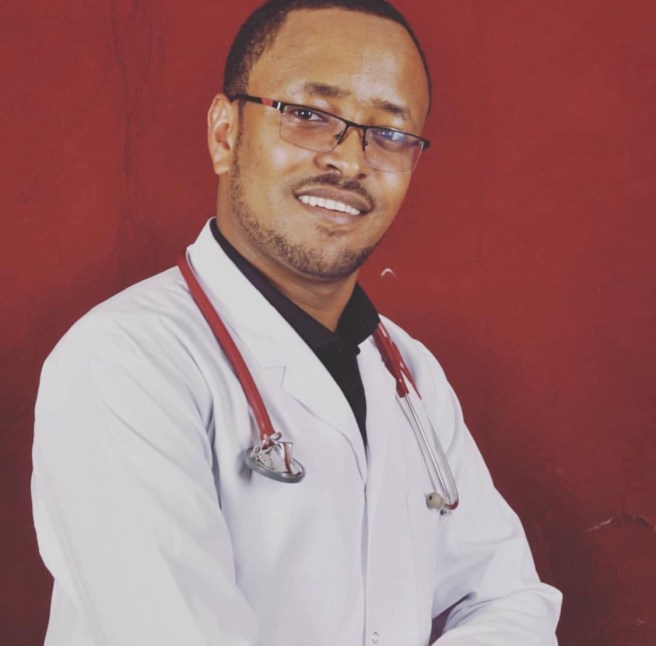
I am an Assistant Professor of Emergency Medicine and Critical Care at Addis Ababa University, College of Health Sciences. As an Emergency Medicine physician, I am committed not only to develop my clinical skills in the Emergency Department but also to improving my skills in clinical research, which all started as a final year medical student during my undergraduate studies.

temesgen beyene

Emergency Medicine (EM) is a completely new specialty in Ethiopia by the time when I have started to pursue my specialty training, with not much research base exists to support our practice. Clinical research done elsewhere is rarely relevant here and many of the research questions asked elsewhere do not apply in our setting. As the practice of EM develops in Ethiopia, research to support that practice must develop also. I wanted to become an expert in the field of clinical research, so I can lead that development.

While I was having my three poster presentations at the International Conference on Emergency Medicine (ICEM 2016) in Cape Town South Africa and also participating in a two-day pre-conference workshop in Research Methodology, I heard news of my acceptance for a one year Harvard Medical School Global Clinical Scholars Research Training Program 2016/17.

temesgen beyene

This was after my own web-based search and application for clinical research training in addition to my residency training.

Global Clinical Scholars Research Training Program (GCSRTP) offered by Harvard University Medical School Office of Global Education is highly competitive clinical research training for clinical research scientists from all over the country. I am one of 113 advanced trainees from around the world selected for their ability and interest in pursuing clinical or epidemiological research. Students are drawn from hospitals, clinics, and academic communities globally and bring the unique perspective of their home country and institution to address research issues in a clinical or population-based setting.

temesgen beyene

This is a year-long intensive program is designed for clinicians and clinician-scientists aimed to achieve three goals: 

  1. To build skills in clinical research, 
  2. To provide knowledge to address issues critical for success in contemporary clinical research, and 
  3. To develop a global network. 

The GCSRTP consists of three on-site workshops (two in London, UK, and one in Boston) as well as 85 online lectures, 5 team assignments, 20 quizzes covering lecture content, a midterm and a final exam, as well as 2 or 3 interactive webinars per month in biostatistics, epidemiology, biostatistical computing, ethics and regulatory approaches, leadership, applied regression, longitudinal analysis and correlated outcomes, survey design, causal diagrams, and advanced quantitative methods. Additionally, I have selected an elective and a concentration and completed my own course work related to those tracks. The program requires an original research proposal as a Capstone Project. Graduation from the program relies on successful completion of this project. And thus, I had successfully completed my capstone project titled Diuretics Options in Acute Coronary Syndrome as a requirement for my successful graduation.

Through the Harvard Medical School Tuition Reduction Program, I was able to negotiate a 50% reduction in the usual tuition of $11,900 for the program. Additional expenses for travel and accommodation and supplies were my responsibility.

How all of the above came into fruition as a start base from my undergraduate study in Medicine?

There was a medical student mentorship research program of the Medical Education Partnership Initiative as a part of the NIH funded grant in 2013. For the same, I have assessed an undergraduate medical student’s clerkship rotation in Emergency Medicine as an Ethiopian experience. This paper, which was also published in the African Journal of Emergency Medicine, was a gateway for all of my clinical research experiences to date. There is a blog post about my clinical research experience in the same journal as well as I was a speaker on the most recent African Conference on Emergency Medicine in Kigali Rwanda, 2018.

My subsequent future as a clinical researcher:

I completed my residency in January 2018. With the skills developed in the GCSRT and my clinical qualification, I was well-positioned to apply for further clinical research fellowship at Addis Ababa University and got accepted for a Junior Faculty Research Fellowship under an NIH funded grant of Medical Education Partnership Initiative 2019-2020. I hope to begin developing research projects, possibly multi-site within Ethiopia that will address the many questions that are relevant to Emergency Medicine as it is practiced in our low-resource setting.

[cite]