Journal Club 10-04-21 : Health Equity, Medical Tourism, and Maternal Mortality in LMICs

Welcome back! The first GEMS LP  journal club of the season took place on October 4th, 2021. During each meeting, we discuss a journal article, a global health clinical topic, and a book chapter from one of two books: An Introduction to Global Health Delivery by Joia Mukherjee or Reimagining Global Health: An Introduction by Paul Farmer, Jim Yong Kim, Arthur Kleinman, and Matthew Basilico.

The goal of journal club is to expose our mentees to fundamental global health concepts and their applications in the real world. Having a diverse cohort of participants allows for lively and engaging discussion based on each participants’ life experiences. Below is a summary of each section presented at journal club. Be sure to join us at our next meeting, taking place November 8th, 2021.

Many of the global health disparities that exist today are a result of centuries of exploitation of developing countries that can trace its roots to the slave trade. As slavery ended in the 19th century, the extraction of people was replaced with the extraction of resources as European nations divided up Africa amongst themselves. By the 20th century, centuries of exploitation had robbed newly independent countries of the resources needed to provide healthcare for their citizens. Newly liberated countries came to rely on Western monetary institutions for loans, which often came with strings attached. Loans from the World Bank and the International Monetary Fund limited the amount of public expenditures on vital healthcare infrastructure, medication, and personnel. Healthcare in developing countries was further undermined by the neoliberal policies promoted by Western countries beginning in the 1980s. Developing countries were compelled to fund healthcare through above-cost user fees, which reinforced unequal access to care and widened healthcare inequality. The neoliberal approach also championed the concept of sustainability, which focused on low-cost preventative care instead of treatment. By the 1990s, this approach had led to widening healthcare inequity between the developed and developing worlds.

An alternative approach advocated for the right to health of every individual as envisioned in the Universal Declaration of Human Rights. The 1978 Alma Ata Declaration proposed that the fulfillment of these rights belongs to the international community through international collaboration. The past several decades has seen an increasing movement towards this idea and away from one based on economics. An example of this would be the recognition in the 1990s that citizens of developing nations with HIV are inherently as deserving of treatment as those from developed nations. By taking an approach rooted in human rights, the international community was able to lower the cost of HIV medication and provide treatment for patients in the developing world.

Discussion Questions:

·Reflect on prior medical service trips you may have gone on or may be offered by your university. In what ways do these trips reflect the legacy of colonialism? How can we “de-colonize” global health in medical education? 

·Should all medical interventions in lower-income and developing countries be “sustainable”? 

Medical tourism is a modern practice in healthcare that is exacerbating global health inequity. For centuries, people of higher socioeconomic classes commonly visited higher developed countries to receive care for their medical ailments. Their journeys are much more expensive than an ordinary citizen could afford but with the advent of air travel and a rapid development of the middle class with a larger share of disposable income, many more people are travelling for medical services today than ever before. The propagation of medical tourism is exacerbating the divide in quality of care in developing countries. As private hospitals primarily attract international patients, they attract more doctors with higher salaries and benefits paid for by medical tourists’ bills. This develops a positive feedback loop that continues to neglect the care of the poorest patients who need the most advanced care and rely on public hospital systems that are already overburdened. Rather than focusing on bettering the care of public hospitals and working for the native populations, private hospital systems and governments encouraging medical systems are further dividing the health gap between socioeconomic classes and contributing to health inequity.

Discussion Questions:

What are some ethical issues developed by private healthcare systems motivated by financial incentives?

• How can medical professionals in our country educate patients about the risks of medical tourism?


Global health disparity is apparent in the care of pregnant individuals, with 94% of all maternal deaths occurring in low and lower-middle-income countries. A leading cause of maternal and perinatal mortality in these regions is hypertensive disorders of pregnancy, especially pre-eclampsia and its spectrum of diseases. Crucial to the screening and diagnosis of these disorders are regular antenatal care and assessment of risk factors, such as advanced maternal age, obesity, diabetes, and existing hypertension. For pre-eclampsia and eclampsia, the WHO has released evidence-supported recommendations for both preventative measures, such as calcium supplementation in areas with low intake, and treatment, such as using magnesium sulfate over other anticonvulsants. In low resource settings, some of the barriers that hinder the care of pregnant individuals with hypertensive disorders are a shortage of specialty-trained healthcare workers, inadequate transportation to healthcare facilities, limited antenatal care, and traditional cultural practices. While much work still needs to be done in tackling many of these challenges, especially in improving basic obstetric emergency treatment at primary community settings, innovative strategies such as task-shifting to train community health workers (CLIP initiative) in providing regular antenatal care and community cost-sharing schemes to eliminate financial barriers to obstetric care in Mali have been shown to have positive outcomes.

Discussion Questions:

· What other non-health related barriers may contribute to maternal mortality?

· What roles can emergency services/emergency medicine physicians play in improving the outcome of obstetric emergencies?

Wrap up!

As you can imagine, our mentees had a wonderful discussion surrounding these three topics! We are thrilled to be able to present a brief summary of their work here. Please stay tuned for details about our upcoming meetings, the next of which is taking place November 8th, 2021.  Connect with us through one of our contact options listed below if you are interested in attending!

Thank you to our authors and presenters!

Picture of Brian Elmore, MS4

Brian Elmore, MS4

Medical University of South Carolina

Picture of Jai Shahani, MS2

Jai Shahani, MS2

Rutgers New Jersey Medical School

Picture of Luxi Qiao, MS4

Luxi Qiao, MS4

Washington University School of Medicine

Sources:

  • Mukherjee, Joia. “Chapter 1: The Roots of Global Health Inequity.” An Introduction to Global Health Delivery: Practice, Equity, Human Rights, Oxford University Press, New York, NY, 2018.
  • Mutalib, Nur & Ming, L C & Yee, Esmee & Wong, Poh & Soh, Yee. (2016). Medical Tourism: Ethics, Risks and Benefits. Indian Journal of Pharmaceutical Education and Research. 50. 
  • 261-270. 10.5530/ijper.50.2.6.
  • http://ijper.org/sites/default/files/10.5530ijper.50.2.6.pdf
  • WHO. Maternal mortality evidence brief, 2019.
  • WHO. WHO recommendations for prevention and treatment of pre-eclampsia and eclampsia, 2011.
  • Fournier P, Dumont A, Tourigny C, Dunkley G, Drame S. Improved access to comprehensive emergency obstetric care and its effect on institutional maternal mortality in rural Mali. Bull World Health Organ 2009; 87: 30-8
  • von Dadelszen P, Vidler M, Tsigas E, Magee LA. Management of Preeclampsia in Low- and Middle-Income Countries: Lessons to Date, and Questions Arising, from the PRE-EMPT and Related Initiatives. Maternal-Fetal Medicine 2021; 3(2): 136-50.
  • Firoz T, Sanghvi H, Merialdi M, von Dadelszen P. Pre-eclampsia in low- and middle-income countries. Best Pract Res Clin Obstet Gynaecol 2011; 25: 537-48.
  • Milne F, Redman C, Walker J, et al. The pre-eclampsia community guideline (PRECOG): how to screen for and detect onset of pre-eclampsia in the community. BMJ 2005; 330: 576-80.


Keep in Touch:

[cite]

Dermatological emergencies : Stevens-Johnson Syndrome

stevens johnson syndrome

Every medical student has three categories of topic division

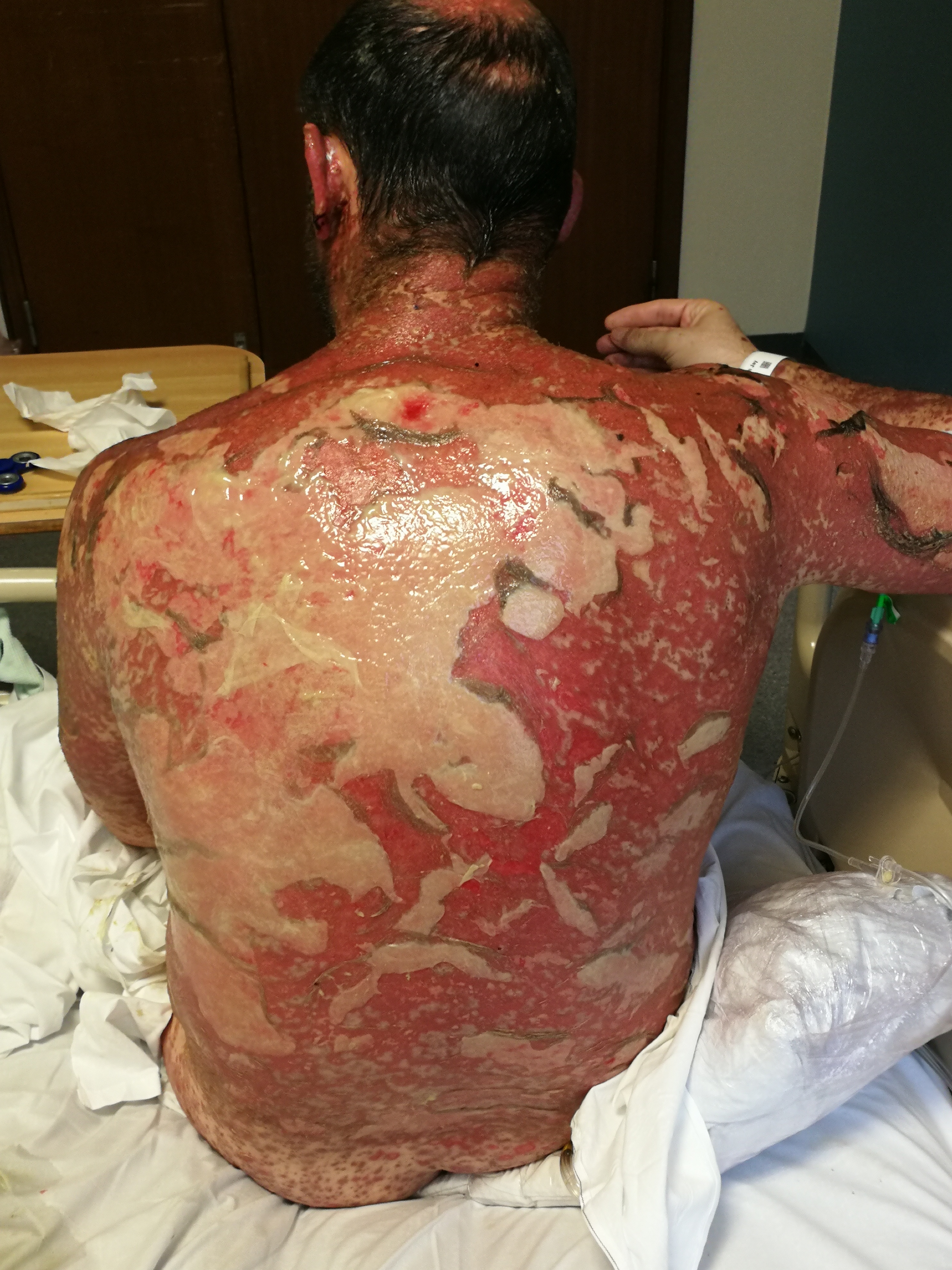
Category 3 catches you by surprise when it makes it an entry in the ED and serves as a reminder of why it is essential always to know something about everything. Stevens-Johnson Syndrome was one of those for me. Although rare, dermatological emergencies are essential to spot and can be life-threatening if left untreated.

Stevens-Johnsons Syndrome is a rare type 4 hypersensitivity reaction which affects <10% of body surface area. It is described as a sheet-like skin loss and ulceration (separation of the epidermis from the dermis).

Toxic epidermal necrosis and Stevens-Johnsons Syndrome can be mixed. However, distinguishing between both disease can be done by looking at % of body surface area involvement.

  • < 10% BSA = Stevens-Johnsons Syndrome
  • 10-30% BSA = Stevens-Johnsons Syndrome/Toxic epidermal necrosis overlap syndrome
  • > 30%= Toxic epidermal necrosis – above image is an example of toxic epidermal necrosis.

Pathophysiology is unknown

Pathophysiology is not clearly known; however, some studies show it is due to T cells’ cytotoxic mechanism and altered drug metabolism.

Causes

The most common cause of Stevens-Johnsons Syndrome is medications. Examples are allopurinol, anticonvulsants, sulfonamide, antiviral drugs, NSAIDs, salicylates, sertraline and imidazole.

As one of the commonest cause is drug-induced, it is a vital part of history taking. Ask direct and indirect questions regarding drug intake, any new (started within 8 weeks) or old medications and previous reactions if any.

Other causes are malignancy and infections (Mycoplasma pneumonia, Cytomegalovirus infections, Herpesvirus, Hep A).

Risk Factors

The disease is more common in women and immunocompromised patients (HIV, SLE)

Clinical Presentations

  • Flu-like symptoms(1-14 symptoms)
  • Painful rash which starts on the trunk and spreads to the face and extremities.
  • Irritation in eyes
  • Mouth ulcers or soreness

Clinical Exam Findings

  • Skin manifestation – Starts as a Macular rash that turns into blisters and desquamation.
  • An important sign in SJS is Nikolsky’s sign: It is considered positive if rubbing the skin gently causes desquamation.
  • 2 types of mucosa are involved in SJS – oral and conjunctiva, which precede skin lesions.
  • Other findings in the examination may include –
  • Oral cavity – ulcers, erythema and blisters
  • Cornea – ulceration

Diseases with a similar presentation – in children, staphylococcal scalded skin syndrome can be suspected as it has a similar presentation and can be differentiated with the help of a skin biopsy.

Diagnosis

Clinical awareness and suspicion is the cornerstone step for diagnosis. Skin Biopsy shows subepidermal bullae, epidermal necrosis, perivascular lymphocytic infiltration, which help for definitive diagnosis.

Management

Adequate fluid resuscitation, pain management and monitoring of electrolytes and vital signs, basic supportive or resuscitative actions are essential, as with any emergency management.

The next step is admitting the patient to the burn-unit or ICU, arranging an urgent referral to dermatology and stopping any offending medications. If any eye symptoms are present, an ophthalmology referral is required.

Wound management is essential- debridement, ointments, topical antibiotics are commonly used to prevent bacterial infections and ease the symptoms.

Complications

  • Liver, renal and cardiac failure
  • Dehydration
  • Hypovolemic or septic shock
  • Superimposed infection
  • Sepsis
  • Disseminated intravascular coagulation
  • Thromboembolism
  • Can lead to death if left untreated

Prognosis

Prognosis of a patient with Stevens-Johnson Syndrome is assesed by the SCORTEN Mortality Assesment Tool. Each item equal to one point and it is used within the 24 hours of admission.

• Age >/= 40 years (OR 2.7)
• Heart Rate >/= 120 beats per minute (OR 2.7)
• Cancer/Hematologic malignancy (OR 4.4)
• Body surface area on day 1; >10% (OR2.9)
• Serum urea level (BUN) >28mg/dL (>10mmol/L) (OR 2.5)
• Serum bicarbonate <20mmol/L (OR 4.3)
• Serum glucose > 252mg/dL (>14mmol/L) (OR5.3)

Predicted mortality based on the above total:

  • 0-1 Point = 3.2%
  • 2 Points = 12.1%
  • 3 Points = 35.3%
  • 4 Points = 58.3%
  • 5 Points = 90.0%

References and Further Reading

[cite]

Recent Blog Posts by Sumaiya Hafiz

Things You Should Know Before Your First ED Shift

Things You Should Know Before Your First ED Shift

I recently posted a question to the Twitterverse:

“Imagine that an Emergency Medicine intern asked you for advice before his/her FIRST SHIFT. What would be your FIRST ADVICE?”

I also raised the same question in Turkish. In a couple of days, I received nearly 100 answers from reputable names of Emergency Medicine working worldwide. I highly benefited from these advice, and I think that our site’s valuable readers can also benefit. I tried to select the most inspiring ones and divided them into main categories. Under each advice, you can find the name of the tweet owner and the link to the original tweet. Let’s start.

Core

Enjoy being on the frontline by helping patients who are seeking your help in their most difficult time. This is a great privilege and responsibility that we should never forget.

Never forget what a privilege and responsibility it is that people don’t know you ask for your help on the WORST DAY OF THEIR LIFE.

In the Emergency Department, you may be worried about 'why am I here?' one day, but you may think that you are doing the best job in the world another day. Now you have a lifetime which every day and every patient is different. Love your profession EVERY WAY, glorify knowledge and skill, and always be at peace with your job.

Education

Never be afraid to say, "I don't know." It's why you're here to be taught. If you already knew everything, then you wouldn't need residency.

Trust yourself as if you know everything, try to learn as if you know nothing.

Want to get smart? Do 2 things: 1) Read up on at least 1 patient every shift. 2) Ask lots of questions to residents, attendings and consultants.

Feel free to ask me (or another senior) about anything (/everything). When I was at that stage I wish I’d asked more. I suspect some people think asking is a sign of ignorance or weakness. Actually, it helps us to be safe & to appreciate other perspectives.

This is the Emergency Room; this is the lion’s den; first, you have to protect yourself, and you will do this with your knowledge. So don't think ‘I'll practice, I'll fill my knowledge gap in 3-5 months', sit down, and read the textbook.

First compel yourself to read at specific points, and gradually you will find your appetite for reading. You are the one primarily responsible for your education!

Never feel shy to ask or say I don't know. It's your chance to make mistakes and learn, share the knowledge you have and don't keep it to yourself.

Of course, you cannot know everything, but you can start learning.

80% of “KNOWLEDGE” is "INTEREST"

Resilience

Resilience

The Emergency Medicine career is a marathon, not just the first few years of residency. Don't waste your energy inordinately for things you can't fix. Invest in the future self.

When you dance with the bear you can't stop until the bear wants to stop.

Calm down. Every shift eventually ends.

Rest and eat, whenever you get the opportunity. The Emergency Room is like a HIIT, you need to slow down first to speed up.

If you are a parent, sleep when the child sleeps.

Empathy

Empathy

Don’t judge patients or consultants without walking a mile in their shoes.

Think of every patient as your relative. Balance your professional authority with your kindness.

Communication is important. Tell the patient and one of his/her relatives what you already did and what you plan to do, and ask if there is anything they want to ask.

Peter Rosen once said, “Nobody woke up this AM decided to ruin your day.” Happiness is YOUR choice. Be happy, stay positive.

Remember, when you see a patient in the middle of the night who requests you to apply his/her prescribed topical cream on his/her back because –apparently- he/she can’t, that person is the joy of the night.

Follow up on your patients. This will reinforce your learning. Call patients at home to see how they’re doing. They will love it, and it reminds you of why you chose this profession.

Remember to acknowledge that you most likely are a stranger to your patient. It only takes a few minutes to reassure someone that you are there to help them through their ER experience as a team. We tend to forget this in the busy ER.

Values

Values

Nobody expects you to know much (yet). But it is expected you to be 100% reliable. Never EVER EVER EVER lie. If you don’t know something or you don’t do something, be honest.

Your attitude to this advice will determine your path through our specialty. The blindingly following advice will bring as much peril as ignoring it all. Emergency Medicine requires you to consider impacts on patients, professionals & the populations - no one approach fits all.

Never EVER EVER EVER be arrogant. You will be wrong many times in your career. Learn humility NOW.

What I like most about emergency medicine is how it allows us new perspectives every day. In the pandemic, we are treating the same disease all the time, but each patient and their family brings a different story, and every time I feel more humble in the face of life, the disease, and the future. Being in a LIMC country can be so challenging, so painful to treat and suffer along with inequalities and lack of resources... But we have the opportunity to be our best, as I said yesterday to my residents: we don’t have the best hospital, but we can be our best and give the patient what they may not have in the best hospital: treatment with dignity and respect and love. For me, being able to show my patients that I care, and receiving their gratitude has been undoubtedly the only possible prevention of Burnout. So I would say: Our specialty is beautiful, the opportunity for growth is vast, but it takes humility and perseverance to complete this journey.

Never allow senior residents of other departments to treat you as if you are their junior.

Our fingers are not equal, and so are the attendings whose hands you train on are not the same nature. There is the gentle one who loves you and there are critics who believe that development comes only with criticism and a dose of pain. Your job is not to try to classify them but to do what is required of you and to benefit from everyone.

We want you to be the brain of a machine in which none of its cogs can work properly. Sometimes, even if you don't know how to swim, you will find yourself in the ocean surrounded by the waves, but most of the time, in the hardest moments, you will find a huge army with you. Welcome...

If you think a senior is wrong about something, give him evidence, but don’t be obstinate...

You may be untutored, but never be uninterested. Because knowledge definitely comes to those who have interest.

Appear weak when you are strong and strong when you are weak. Look weak when strong; look strong when weak. Also don't forget to look at vital signs 😉

Don’t be a d*ck.

Enjoy your junior days, qualify for your senior days.

Patient Records

Patient Records

(Carefully) Fill out the patient records. What will save you from everything are these records.

Spoken words fly away, written words remain. Record everything...

What is not written is deemed not done. First, protect yourself and then protect the patient. Choose a good role model.

Workup

No workup can replace a good physical examination.

Never order a test that you won’t check the results.

Know your tests! Know their rough sens/spec and when to trust them (and more importantly, when NOT to trust them)!! No test is 100%, and all are context-dependent!

Decision Making

Being efficient should never be at the expense of being thorough. You will eventually have to waste more time making things right.

If someone brings up a concern, go to the bedside.

Think simple, make a quick decision. Determine the senior you will take as a model.

Once you suspect about a diagnosis, be sure to rule it out.

Do not forget to consider emergencies and other diseases while focusing on frequent diseases of the period, such as COVID. The most important thing that the emergency doctor needs to do is to look at the case from a wide perspective from the very beginning.

Watch out for the last patient who came just before your shift ends.

In emergency medicine [and in life :)] the possibilities are 0% or 100% only in limited scenarios. You need to quickly learn managing probabilities, setting priorities, distinguishing acceptable and unacceptable risks. Also you need to learn reading the environment; because it usually gives many signs before the problem emerges.

Patient in the Resus is easy. Spotting the patient with a real emergency in minors is the tough one.

First rule of emergency response is to ensure your own safety!

When in doubt or worried about someone, talk to floor senior physicians EARLY.

I would say to try your best to remain open-minded and try to be aware of your biases and blindspots. This applies especially to patients with psychiatric illness and substance use disorders. If you're explaining X symptom on Y problem, always ask yourself, "Does this actually make sense?

The most frequently overlooked diagnosis in the emergency room is the second diagnosis! Do not limit your perspective to one diagnosis. Most frequently missed fracture in the emergency room? The second one! Remember that the patient may have a second fracture!

While assessing only isolated parts, don’t miss to assess the patient as a whole. Do not evaluate the patient on a single system, single organ basis. Emergency Medicine requires ‘holistic assessment’.

Discharging

No hospital bed belongs to you. If in doubt, do not discharge the patient.

Do not discharge the patient relying on what someone else is telling you without assessing by yourself!

Do not discharge the patient after midnight: You may be tired, you may overlook something, the patient and his relatives may not find a car or money to leave, or they may try to go to the town or another city but have an accident on the road, etc. Those all happened (Not my personal experience, but I have seen them), evidence based...

Before discharging the patient whose treatment is completed, make sure to think like that: ‘Is there any possibility that this patient will come back with a cardiac arrest before the shift ends?’ If you are hesitant, prolong the process.

The patient at the hospital is better than the patient at home’. Do not discharge if you are not sure.

Team Play

Emergency Medicine is teamwork. Get along well with your colleagues, your nurse, your intern, your staff and your secretary. Find yourself a role model, try to be a good example for others. And enjoy the Emergency Medicine.

You may learn a lot of thing from your nurse, act like a teammate.

That’s all for now. By the way, what would your advice be?

[cite]

Triads in Medicine – Rapid Review for Medical Students

triads in medicine

One of the most convenient ways of learning and remembering the main components of disease and identifying a medical condition on an exam are Triads, and medical students/interns/residents swear by them.

Be it a question during rounds, a multiple-choice exam question to be solved, or even in medical practice, the famous triads help physicians recall important characteristics and clinical features of a disease or treatment in an instant.

Since exam season is here, this could serve as a rapid review to recall the most common medical conditions.

While there are a vast number of triads/pentads available online, I have listed the most important (high-yy) ones that every student would be asked about at least once in the duration of their course.

1) Lethal Triad also known as The Trauma Triad of Death
Hypothermia + Coagulopathy + Metabolic Acidosis

2) Beck’s Triad of Cardiac Tamponade
Muffled heart sounds + Distended neck veins + Hypotension

3) Virchow’s Triad – Venous Thrombosis
Hypercoagulability + stasis + endothelial damage

4) Charcot’s Triad – Ascending Cholangitis
Fever with rigors + Right upper quadrant pain + Jaundice

5) Cushing’s Triad – Raised Intracranial Pressure
Bradycardia + Irregular respiration + Hypertension

6) Triad of Ruptured Abdominal Aortic Aneurysm
Severe Abdominal/Back Pain + Hypotension + Pulsatile Abdominal mass

7) Reactive Arthritis
Can’t See (Conjunctivitis) + Can’t Pee (Urethritis) + Can’t Climb a Tree (Arthritis)

8) Triad of Opioid Overdose
Pinpoint pupils + Respiratory Depression + CNS Depression

9) Hakims Triad – Normal Pressure Hydrocephalus
Gait Disturbance + Dementia + Urinary Incontinence

10) Horner’s Syndrome Triad
Ptosis + Miosis + Anydrosis

11) Mackler’s Triad – Oesophageal Perforation (Boerhaave Syndrome)
Vomiting + Lower Thoracic Pain + Subcutaneous Emphysema

12) Pheochromocytoma
Palpitations + Headache + Perspiration (Diaphoresis)

13) Leriche Syndrome
Buttock claudication + Impotence + Symmetrical Atrophy of bilateral lower extremities

14) Rigler’s Triad – Gallstone ileus
Gallstones + Pneumobilia + Small bowel obstruction

15) Whipple’s Triad – Insulinoma
Hypoglycemic attack + Low glucose + Resolving of the attack on glucose administration

16) Meniere’s Disease
Tinnitus + Vertigo + Hearing loss

17) Wernicke’s Encephalopathy- Thiamine Deficiency
Confusion + Ophthalmoplegia + Ataxia

18) Unhappy Triad – Knee Injury
Injury to Anterior Cruciate Ligament + Medial collateral ligament + Medial or Lateral Meniscus

19) Henoch Schonlein Purpura
Purpura + Abdominal pain + Joint pain

20) Meigs Syndrome
Benign ovarian tumor + pleural effusion + ascites

21) Felty’s Syndrome
Rheumatoid Arthritis + Splenomegaly + Neutropenia

22) Cauda Equina Syndrome
Low back pain + Bowel/Bladder Dysfunction + Saddle Anesthesia

23) Meningitis
Fever + Headache + Neck Stiffness

24) Wolf Parkinson White Syndrome
Delta Waves + Short PR Interval + Wide QRS Complex

25) Neurogenic Shock
Bradycardia + Hypotension + Hypothermia

Further Reading

[cite]

ICON360: Tracy Sanson – Full Interview – Audio

iEM team proudly presents the ICON360 project. In this pleasantly educational series, world-renowned experts will share their habits, give advice on life, wellness and the profession.

In this episode, we shared the full interview of Dr. Tracy Sanson. 

Who is Dr. Sanson?

Dr. Sanson is a practicing Emergency Physician. She is a consultant and educator on Leadership development and Medical education and Co-Chief Editor of the Journal of Emergencies, Trauma and Shock; an Emergency Medicine international journal. A frequent speaker for Emergency Medicine programs, Dr. Sanson also serves as a core faculty member for the American College of Emergency Physicians. Dr. Sanson has consulted and lectured nationally and internationally on administrative and management issues, leadership, professionalism, communication, patient safety, brand development, personal development, womenäó»s issues and emergency medical clinical topics for a wide range of health care organizations. Dr. Sanson’s experience spans 20 + years in Emergency Medicine Education and ED management and leadership development. She has held director positions in the US Air Force, University of South Florida and TeamHealth for the past 15 + years. Dr. Sanson trained at the University of Illinois at Chicago for medical school and her emergency medicine residency. She is well versed in leadership, patient safety and medical management issues having served on TeamHealth’s Medical Advisory Board, Patient Safety Office Division Director and faculty in their Leadership Courses. (resource: https://feminem.org/author/tracy-sanson-md/)

iEM team proudly presents the ICON360 project. In this pleasantly educational series, world-renowned experts will share their habits, give advice on life, wellness and the profession.

The interview was recorded and produced by

Arif Alper Cevik

Elif Dilek Cakal

Murat Cetin

Happy week with tons of education!