COVID-19; Reflecting on a Globalized Response

COVID-19; Reflecting on a Globalized Response

As I write this is, it has been 200 days since the first reports in China came out regarding an unspecified viral illness in Wuhan, China. What is now the pandemic of COVID-19 has spread around the world, and in history books and our collective memory, the year 2020 will forever be closely associated with this virus. There have been nearly 14 million confirmed cases around the world and nearly 600,000 known deaths from COVID-19. Some countries have done incredibly well with containment measures, while others continue to see case counts grow every day.

It has been fascinating to see how the outbreak has had different impacts in communities around the world, including how local and global responses have efficiently controlled or been unable to contain this novel public health problem. Prevention and mitigation strategies continue to form the foundation of public health management of this outbreak. The capacity for any country or locality to provide the most invasive supportive care is widely variable, and even when it is available mechanical ventilation is certainly not a panacea as COVID-19 case-survival rates in those being mechanically ventilated have been low (from 14% to 25%).

At the core of the variable outcomes seems to be a mix of sociological issues: a mix of personal beliefs, geography, politics, socio-economics and health infrastructure which lead to vastly different outcomes around the globe.

The accumulation of more epidemiological data over the past 200 days has improved our collective understanding of the COVID-19 virus, as today we have improved models and a better understanding of the rates of asymptomatic carriers (estimated at 40%) and mortality rates (1.4%-15.4%). Yet still, uncertainties and local variability (even within countries) have made an accurate calculation of the COVID-19 basic reproductive number (R0; the number of people who are infected by a single disease carrier) difficult. In the early stage of the outbreak in Wuhan, R0 calculation ranged from 1.4-5.7, and some have suggested that instead of single R0 value, modellers should consider using ongoing contact tracing to gain a better range of transmissibility values.

We have seen how prevention strategies such as hand-washing, face-masking, and physical distancing can impact local and disseminated disease spread. While many communities have come together through a collective approach to lock-downs and universal masking measures, other localities have struggled to get adequate levels of citizen compliance. Others have struggled with obtaining testing supplies. Certain political systems allow for streamlined and unified directives while others have made it difficult to provide adequate centralized coordination.

As the COVID-19 pandemic has spread to almost every country in the world, outbreaks are smoldering in much of the global south. While the United States continues to see rising numbers of cases with numerous states confronting ongoing daily record high incident cases, other countries such as Brazil are seeing similar upward trends. At the global level, the curve of daily incident cases seemed to have “flattened” and held steady through much of April and into May with aggressive seemingly worldwide measures. However, since the last days of May, global incident cases have been again steadily increasing. This is likely due to a variety of reasons but is linked, at least in part, to efforts to reopen economies and return to pre-pandemic routines and lifestyles.

covid-19 daily cases
Source: Johns Hopkins University Coronavirus Resource Center https://coronavirus.jhu.edu/map.html, accessed July 17, 2020

As an American citizen and a physician with training in public health, it has been both interesting and frustrating to see the how some countries (including my own) have had deficiencies in dealing with testing and basic prevention (such as mandatory universal masking). While I don’t want to engage in political rhetoric or cast blame in any one place, I do think it is instructive to point out that in the United States (or anywhere else for that matter) the sociological factors of personal preferences and autonomy, geography, and local politics have had an overwhelming influence in determining the progress of the pandemic.

Quarantining has always been a unique problem that sits at the intersection of personal autonomy and communal wellbeing, and is implemented and respected by citizens in different ways around the world. It would seem, at least anecdotally, that cultures with an emphasis on personal independence and autonomous choice have had greater difficulty with containment or in obtaining high levels of compliance with masking and distancing measures, even when compared to other localities with similar socio-economic situations.

These sociological factors are key to responding to and managing any epidemic health concern. We have come to see that in our globalized world, our ability and desire to work together towards a common goal, even at the cost of personal sacrifice, will determine our ability to control both the COVID-19 pandemic and the next health crisis of the future.

Public health education and communication, it would seem, is at the crux to getting collective buy-in and global participation.

Unfortunately, as with so many things these days, such issues can be easily politicized and cause fractured and disparate approaches to response. In our globalized world, this coronavirus outbreak is unlikely to be the last public health crisis we must face as a worldwide community.

As thoughts turn towards what is to come, from vaccine development and distribution to numerous long-term economic impacts, we are not nearing the end of this outbreak yet.

The incidence curve is growing, and there is much work left to be done. My hope is that as we move into the second half of 2020, our global community can continue to find ways to improve communication and coordination in order to come together to approach and control this pandemic collectively. The fate of this outbreak, and likely the next, hangs in the balance.

[cite]

Advantages of Global Health and International Emergency Medicine Outreach Experiences

Bryn Dhir - Global Health

Wherever you go, be all there

International medicine is among the most valuable experiences not only for residents and students, but for physicians from all specialties. Emergency medicine (EM) physicians, in particular, have previously been highlighted with critical qualities and characteristics essential to successfully providing medical aid and care in some of the most remote regions, rugged wilderness, and disaster zones. In recent years, the practice of physicians travelling overseas with the goal of outreach, and professional and personal development, has been met with the flux of international patients travelling to the United States and Canada in search of medical treatment, as well as international physicians seeking to develop their own clinical skills and enhance medical practices to take back home. Physicians and patients both face challenges associated with these new experiences: the stresses of traveling, financial concerns, family obligations, cultural practices, and preparing for the unknown. As such, it is important to remember that patients also encounter anxiety, cultural and communication differences, have concerns for the continuity of care associated with filling in missing gaps in their own medical records and fluctuating medical aid providers and often lack medical knowledge and understanding of health issues. Interactions that patients have with visiting physicians can also allow patients to gain insight into new practices, cultures and traditions. These experiences can be life-changing for everyone involved.

While global outreach, international medicine or disaster preparedness isn’t for everyone, it is important to remember that global health does not equate to the definition of international medicine, and that there is a strong need for domestic medical outreach in rural America and Canada, in locations that present with similar challenges of underserved patient populations and with limited resources. Nonetheless, the benefits of medical work in new environments outside of comfort zones can provide tremendous benefits and contributes to the overall continuous development of a well-rounded physician. The advantages of participating in global health and international medicine are extensive, and this article highlights only some of the major benefits.

Strengthen leadership, communication and interpersonal skills

Before EM physicians begin their medical work with patients, the potential to strengthen leadership, communication and interpersonal skills through interactions with local residents is often experienced with language being a major factor in effective communication. This includes not only the spoken word, knowledge of key phrases in the native tongue, but the use of body language, eye contact, and hand gestures. Understanding different approaches to patient scheduling, staff and local perceptions about meal, travel and leisure times, administrative and medical support, and negotiation and conflict management skills, allows for a more productive and enjoyable experience. Further, not only are individual skills, but so is teamwork and an understanding of the functional dynamics. Participation in outreach contributes to the development of many skills including independent decision making, project management (from funding to administration, allocation of materials and supplies, to public relations and follow up), and creativity in the face of limited resources.

Team building and group dynamics
Team building and group dynamics through icebreakers and interactive games for medical volunteers. The ability to draw on previous training and skill sets outside of clinical practice is beneficial for ease flexibility, adaptability and cooperation.

Cultural Competency

Exposure to patients contributes to cultural awareness, understanding of the impact of socioeconomic factors on health care, historical and geographical issues, and puts to use clinical and language skills while immersed in a new environment. Participating in local events is a valuable learning experience, and clinical work in the developing world or remote rural locations in North America can contribute to a physician’s ability to understand and advocate for patient health care needs.
These basics will allow for a better understanding of cultural differences, institutional and policy barriers, communication barriers, managing through unknown and incomplete medical records, financial constraints which can limit tests and treatments, and influence management as medical work begins. Numerous resources are available for emergency physicians entering new environments for the first time to help provide insights regarding gender issues, cultural practices, religion, politics, current social events to name a few. It is important to do thorough background research into patient populations and to be aware of the community you will be entering. For EM physicians in rural North America, opportunities to work with nongovernment organizations and refugees can provide exposure to international and global patient populations who need your clinical skills and medical training. The American College of Emergency Physicians(1), Emergency Medicine Residents Association(2), Society for Academic Emergency Medicine(3), offer thorough information and resources for rotations and fellowships for international emergency medicine, and the American Academy of Family Physicians lists resources for physicians interested in Global Health(4). A list of additional reading and resources is provided below.

understanding cultural differences
Getting acquainted with local surroundings, understanding cultural differences and being open to participate in traditions while maintaining the security of your team and yourself.

Exposure to new practices and health care systems

Physician shortages and limited financing of healthcare are global concerns; however, there is an excellent benefit for physicians who learn to treat and understand a variety of patient populations despite these limitations.

This is an essential obligation of EM physicians. International medical rotations are a concept that has slowly been incorporated into medical schools. Nearly ten years ago, a survey published in Academic Medicine concluded that international rotations broadened medical knowledge and reinforced physician examination skills(5).

International rotations broadened medical knowledge and reinforced physician examination skills.

Further, learning about other healthcare systems, medication preferences and availability, and equipment as well as protocols and practices, can allow for incorporating practices back home, as well as suggesting sustainable changes for improvement overseas.

The challenge of thinking outside the box and learning to be resourceful with equipment is yet another benefit to international medicine, where poverty-related diseases demand thoughtful consideration to resources and long-term management of patient cases. Distinguishing differences among clinical practice and procedural skills in a respectful, intuitive manner and with an understanding of varying standards of care and limited resources is also essential for international outreach. While dealing with these issues may be frustrating, maintaining confidence in one’s own training, calling on previous life experiences and harnessing multi-disciplinary teams with diverse cultural backgrounds, will prove to be beneficial in providing effective patient treatment. Besides, exposure to other health care systems can allow for research into the best strategies for administration and management, for not only physician practices, but for patients and health care systems at large.

Medical clinic on Station Hill, Mayreau Island
Medical clinic on Station Hill, Mayreau Island in the Grenadines. This isolated island is only accessible by boat. Island size: 0.46 square miles, population 271. The number of patients care for during an outreach clinic was approximately 70.
global health

Medical Knowledge, Self-Sufficiency, Resources and Equipment

Caring the patients reveal the diversity of diseases and disorders and provide insight on the local health care issues. The variety of cases differs between hospital and ambulatory settings. EM physicians have the opportunity to see and manage rare diseases and disorders uncommon back home, with a highlight on cases involving infectious diseases, toxicology, advanced diseases. Knowledge of disease presentations, prevalence, and exposure to the seemingly foreign diseases has been a recent consideration with the migration of people not only at the international scale, but at the local level across the States. Social, mental, and financial support is another layer that health care systems are working to provide for these vulnerable patient populations. Moreover, the added pressure of finding solutions for medical cases requiring advanced procedures can be disheartening, and EM physicians must become the nurse, specialist, social worker, therapist, surgeon, administrator, pharmacist and physical therapist all in one. Creative uses of equipment, thinking outside the box, and making use of what is available are other factors that will be frequently tested while in the field. Training in the wilderness and extreme medicine, as well as rural family medicine practices is advantageous for physicians in the global setting where multiple uses for one instrument is applied in various situations. Nonetheless, adhering to the training in medical school and residency is the basis for all medical work and ethical best practice, professionalism and management are the foundation to providing patient care regardless of location.

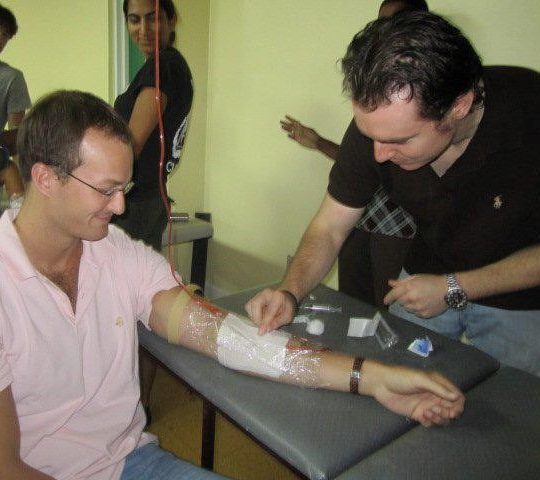
Learning to do IV
Learning to do IV placements using self-designed, mock equipment and the understanding of the importance of improvisation, flexibility and limited resources.
Knowledge of how to operate medical equipment
Knowledge of how to operate medical equipment without support staff is beneficial.

In response to the growing interest and need for physicians in underserved global populations, there has been an increase in funding opportunities.Prior to embarking into unknown territory and patient scenarios, it is recommended that a physician’s own resources are known, including potential health risks, and that support systems are in place in order to maintain a mental and physical balance to provide care where it is desperately needed. Culture shock, grief and sadness, personal debriefing and reflection, and adjusting to life back home is an additional element to tend to.

neonatal care and pediatric care
There is a great need for neonatal care and pediatric care on a global scale. Experience with these patients will be an asset in the field.

Outreach, Education, Research, Mentorship

The opportunity to provide preventative and screening information directly to patients through clinics and to physicians at training sessions allows for direct two-way communication, clarity and the sharing of knowledge bases. Additional outreach at clinics and mobile health units often add to the overall value and maximizes a physician’s ability to provide outreach and education. Furthermore, opportunities may exist for collaborations with clinicians and scientists as well as health policy advisors. Although the notion of global health has attracted the fad of medical tourism and entails a certain novelty of volunteering abroad, emergency physicians have a great opportunity to make a lasting difference on the lives of their patients as well as those of international colleagues who are either interested in practicing in North America(6) or who will stay with the communities and health systems they are in. Therefore, building and fostering a network of connections for the future is an important and positive outcome, with the potential to provide up to date journal articles, resources to evidence-based medicine and free online medical education, and can allow you to incorporate global health initiatives and outreach back home. At the end of the day, physicians who are driven to extend their medical knowledge and clinical skills into regions with a desperate need for health care and vulnerable patient populations are often those who have made the commitment to serve as an emergency physician.

Basic wilderness training
Basic wilderness training with a focus here on evacuating an injured victim in remote communities (here in northern Nunavut, Canada).
positive lasting impacts on youth.
Global outreach and international medicine opportunities can include taking the time to travel out of the clinic and visit schools to train and share knowledge with younger students. Creating interest and awareness can have a positive lasting impacts on youth.
Youth often appreciate visits to their schools
Youth often appreciate visits to their schools, and their interest in health care, medicine, prevention can be highlighted with education in emergency services, as well as through games and storytelling.

The experience of a global project and working in a clinic on an international scale enables EM physicians and students from all levels of training to provide care in emergent situations from disaster and humanitarian relief to outreach clinics. For physicians and students who opted to pursue medical education in a global setting, as an international graduate or for North American physicians who thrive on global health and international outreach, the experiences are unlike those in North America, and there is an abundance of personal and professional learning and development to gain. Experiences outside of comfort zones, whether in rural America or overseas, create a global community to better medical practices and often advocacy for health care continues long after a global project has concluded.

The Model of the teaching hospital, which links research to teaching and service is what's missing in global health

This article touched on the advantages and benefits of stepping outside comfort zones to provide medical care to vulnerable patient populations, and a follow up to this article will be how to overcome the challenges and barriers that physicians may encounter. Have you participated in a global health project or international outreach? Please feel free to share your own thoughts and reflect on your experiences in the comments section below.

A Piton climb for the view, St Lucia.
A Piton climb for the view, St Lucia. Medical outreach and travel is a demanding endeavor, however quiet moments to enjoy the process and experiences will make it a rewarding one.

Additional Reading and Resources

  • What is International Emergency Medicine? Academic Life in Emergency Medicine – link
  • International Emergency Medicine Section, American College of Emergency Physicians – link
  • The Practitioner’s Guide to Global Health, American College of Emergency Physicians – link
  • US Residents: Discover the World with Emergency Medicine, Emergency Medicine Residents Association – link
  • Fellowship Database, Society for Academics Emergency Medicine – link

Link To References

[cite]

You may like to read these articles too