Journal Club 3/21/22: Mental Health in the International Community

Prevalence of burnout among university students in low- and middle- income countries: a systematic review and meta analysis - presented by Jonathan Kajjimu

Burnout is a form of distress that manifests with features of emotional exhaustion, depersonalization, and reduced personal/professional accomplishment. Emotional exhaustion or unsuccessful coping with stressors, is the fatigued feeling that develops as one’s emotional energies are drained. Depersonalization refers to a student’s indifference, negative or cynical attitude. Reduced personal accomplishment is a negative self-evaluation of one’s abilities which manifests itself with feelings of failure. University education is an intrinsically demanding time which puts university students at risk for burnout, coupled with other burnout risk factors such as individual/personal factors and extracurricular factors. Burnout causes significant physical, emotional, psychological, and spiritual damage to students.  

However, from this article there had been paucity of and discrepancies in data on the overall prevalence of burnout in university students from low- and middle-income countries (LMICs). Students pursuing health-related programs in mostly high-income countries (HICs) had been mostly studied previously.

In this review, 55 articles were included, with a total of 27,940 (female: 16,215, 58.0%) university students from 24 LMICs. The Maslach Burnout Inventory (MBI) was found to be the most widely used tool for measuring burnout in 43 studies (78.2%). The pooled prevalence of burnout was 12.1% (95% CI: 11.9–12.3; p = < 0.001). Pooled significant prevalence of emotional exhaustion, cynicism, and reduced personal/professional efficacy were 27.8% (95% CI 27.4–28.3), 32.6% (95% CI: 32.0– 33.1), & 29.9% (95% CI: 28.8–30.9) respectively. Burnout pooled prevalence was highest among the African region at 35.4%, followed by the Asian region at 30.2%, and the European region at 20.7%. 
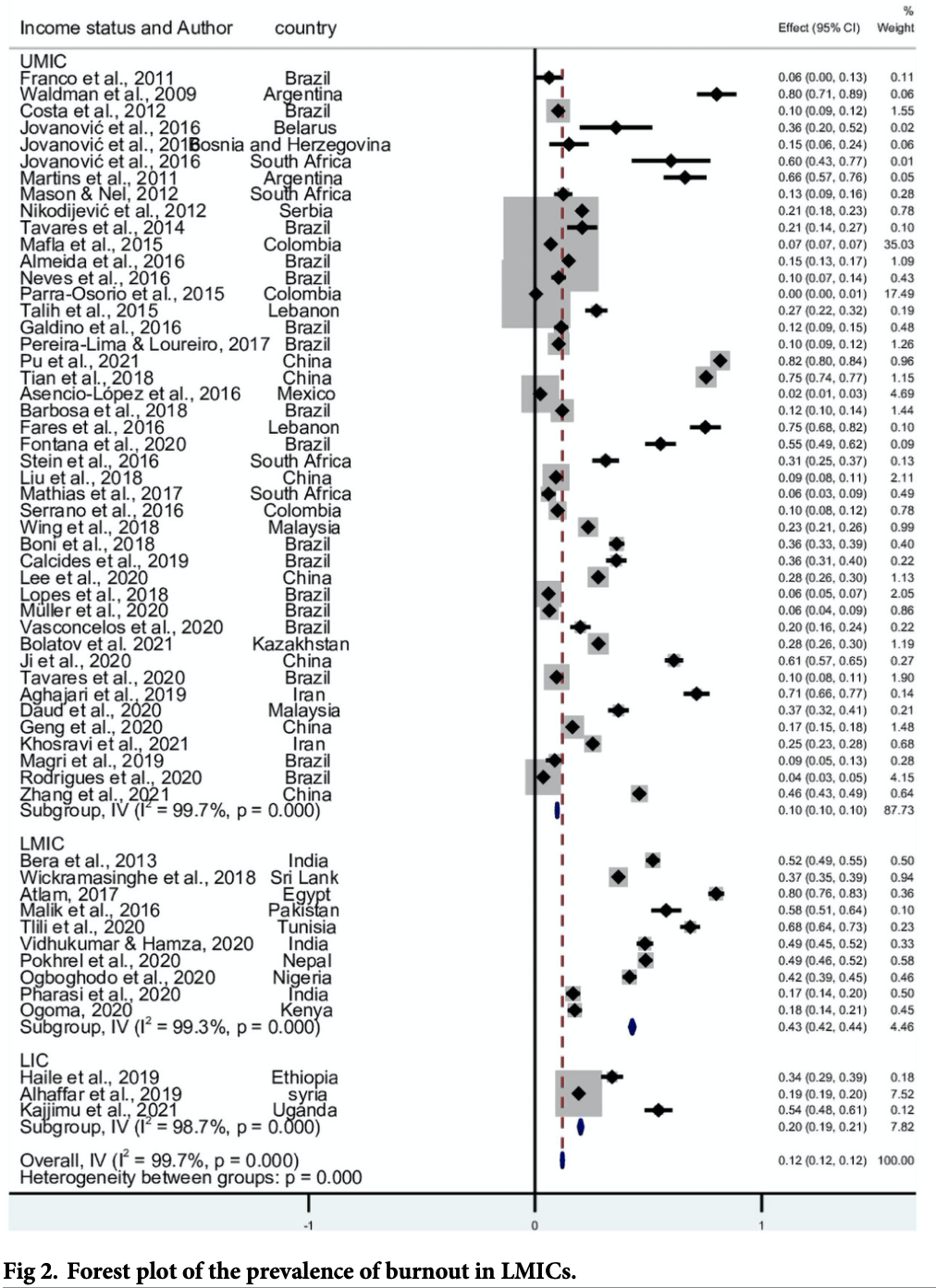

Figure 1: Forest plot for the prevalence of burnout in LMICs

In this review, burnout rates found in LMICS were lower than those in HICs, which the author believed to be due to publication bias. Authors further recommended low cost interventions that were needed more in low income countries than in middle income countries for managing burnout. These included mindfulness practices, yoga exercises, and group discussions. The current COVID-19 pandemic was also highlighted as having been found to put university students at a higher risk of burnout. Consequences of burnout in students include absenteeism, drop out, reduced academic performance, depression, alcohol and drug abuse, suicide, professional impairment and dissatisfaction, increased incidence of errors and near-misses.

Discussion Questions:

  • How can medical schools focus more on mental health of medical students?
  • How can we ensure that medical students always have their wellbeing in check? 
  • Do you think medical students actually get burnt out or are they just morally injured?

Some of the great recommendations received were having wellness days, “Opt out sessions”, and free counselling sessions in medical school for openly bringing out mental health issue discussions. However, one student confidently believed it would be difficult for schools to focus on mental health of students despite other discussants’ optimism.

Med students can: Focus on reducing energy drain. Identify what you can change – and what you can’t.  Align your goals, values and beliefs. Set limits and delegate. Create new challenges that are aligned with your values. Give yourself frequent breaks. Seek support. Monitor your energy level and emotional state. Eat energy and brain foods. Pace yourself. Build problem-solving skills. Lighten the situation with humor. Having regular physical exercise. 

Medical schools can: Advocate for student autonomy i.e. ability to influence student environment and schedule control. Provide adequate support services such as counselling, secretarial, administrative, social work, and financial. Encourage collegial work environments, healthy relationships and sharing of common goals. Minimize school-home interference. Promote proper work-life balance. Ensure vacation time and limit overtime. Establish mentoring. Consider periodic sabbaticals.

Kaggwa MM, Kajjimu J, Sserunkuma J, Najjuka SM, Atim LM, Olum R, et al. (2021) Prevalence of burnout among university students in low- and middle-income countries: A systematic review and meta-analysis. PLoS ONE 16(8): e0256402. https://doi.org/10.1371/journal. pone.0256402

Mental Health in the International Community - Presented by Alexander Gallaer

Mental illness is a topic that is still gaining awareness, acceptance, and understanding in many parts of the world. While western medicine, most notably the DSM-V, has sought to carefully categorize and define mental disease, the definition of what constitutes mental illness is still very much disputed globally. Unfortunately, many global populations may suffer from unaddressed mental health struggles as a result of these varying attitudes. Notably, post-traumatic stress disorder (PTSD), as defined by the DSM-V, is a disease that has an enormous global burden. As emergency physicians increasingly become the sole health care providers, especially in marginalized populations, it is important to have awareness of what groups may need special attention or follow up to diagnose or address underlying PTSD. Some of these groups include male military veterans (lifetime prevalence of 30.9% (1)), emergency healthcare providers (up to 15.8% (2)), and, most notably here, refugee populations (up to 62% in some Cambodian cohorts (3)). Early recognition of symptoms and swift referral of patients to mental health services as soon as symptoms are identified could alleviate long term disease burden and lead to improved outcomes (4). Because refugee populations are high risk, providers can consider routinely screening for symptoms.

Discussion Questions:

  • How would you approach treating a mental health crisis in an individual who does not believe such issues exist, or that such disease processes can affect them?
  • How can we raise awareness of PTSD in populations with traditionally low recognition of mental illness? Should we do this?

References:

1) Kessler RC, Berglund P, Demler O, Jin R, Merikangas KR, Walters EE. Lifetime prevalence and age-of-onset distributions of DSM-IV disorders in the National Comorbidity Survey Replication. Arch Gen Psychiatry. 2005;62(6):593.

2) Bahadirli S, Sagaltici E. Post-traumatic stress disorder in healthcare workers of emergency departments during the pandemic: A cross-sectional study. Am J Emerg Med. 2021 Dec;50:251-255. doi: 10.1016/j.ajem.2021.08.027. Epub 2021 Aug 14. PMID: 34416516.

3) Marshall GN, Schell TL, Elliott MN, Berthold SM, Chun CA. Mental health of Cambodian refugees 2 decades after resettlement in the United States.JAMA. 2005;294(5):571.

4) Fanai M, Khan MAB. Acute Stress Disorder. [Updated 2021 Jul 17]. In: StatPearls [Internet]. Treasure Island (FL): StatPearls Publishing; 2022 Jan-

The Unique Challenges of Mental Health and Multidrug Resistant Tuberculosis- Presented by Ellen Chiang

Calculating disability adjusted life years (DALY) aims to quantify disease burden in terms of both mortality and morbidity. This calculation is an important tool in global health work and as with all tools, it has limitations. Attempts to quantify disability from mental health disorders demonstrate the constraints of the DALY. 

Our understanding and definition of what classifies a mental illness is influenced by our sociocultural context. The Diagnostic and Statistical Manual of Mental Disorders (DSM) is therefore impacted by politics and prejudice. While DALY calculations include sex and gender as weighted factors, many other social factors are not considered. Additionally, much of the medical research published in the major psychiatric journals center on Euro-American study populations, which limits the cross-cultural application of findings. 

Without full consideration of what is not captured by our quantitative measurement of choice, global health interventions can have unintended, significant consequences. The book chapter highlights this by discussing the emergence of multidrug resistant tuberculosis (MDTRB) from the implementation of the DOTS protocol in Peru, which was supported largely by the cost effectiveness paradigm. 

Global health experts should understand the limitations of the DALY when using it to identify priorities and create and evaluate interventions. Remaining aware of what falls outside of the DALY can help create more context appropriate health interventions and new measurements that factor in important social dimensions of disease burden

Discussion Questions:

  • Is it possible to create a metric for disease burden that accounts for social context?
  • When implementing a large-scale health intervention, what are some ways to maintain the flexibility needed to address unexpected challenges?

References:

Ji, Jianlin, Arthur Kleinman, and Anne Becker. “Suicide in Contemporary China: A Review of China’s Distinctive Suicide Demographics in Their
Sociocultural Context.” Harvard Review of Psychiatry 9, no. 1 (2001): 1– 12.

Anand, Sudhir, and Kara Hanson. “Disability-Adjusted Life Years: A Critical Review.” Journal of Health Economics 16, no. 6 (1997): 685– 702.

Sen, Amartya. “Missing Women: Social Inequality Outweighs Women’s Survival Advantage in Asia and North Africa.” British Medical Journal 304, no. 6827 (1992): 587– 588.

Wrap up!

We thoroughly enjoyed the discussion sparked by these three mentees and are proud to be to present a brief summary of their work here! Please stay tuned for more article summaries and details about our upcoming meetings.  Connect with us through one of our contact options listed below if you are interested in attending!

Thank you to our authors and presenters!

Picture of Jonathan Kajjimu, MS5

Jonathan Kajjimu, MS5

Mbarara University of Science and Technology

Alexander Gallaer, MS4

University of Connecticut School of Medicine

Picture of Ellen Chiang, MS4

Ellen Chiang, MS4

UNC Chapel Hill

Picture of Jeff Downen, MD, MS

Jeff Downen, MD, MS

PGY-2 University of Florida, Jacksonville
Blog Editor

Keep in Touch:

[cite]

Journal Club 1/10+1/31/22: Sustainability and Language Justice

Tropical Diarrheal Illnesses in Children by Ying Ku

Tropical diarrheal illnesses (TDIs) are major health concerns around the world, especially in resource-limiting countries, resulting in approximately 500,000 child deaths annually. TDI is a gastrointestinal infection caused by pathogens that are prevalent in the tropical regions, with diarrhea being the main presentation. Most commonly, these diseases are spread by contaminated food and water due to inadequate sanitation and poor hygiene. Among various microorganisms that can result in TDIs, Rotavirus and E. coli are the most common agents causing moderate to severe diarrhea in children in resource-limiting countries. Some common signs and symptoms are diarrhea, nausea &amp; vomiting, cramps, fatigue, fever, and chills. However, TDIs may result in death secondary to severe dehydration. When assessing TDI patients, it is crucial to determine  dehydration status and identify the type of diarrhea (watery or dysentery) given the different treatment approach. The most important treatment is rehydration with oral rehydration salts (ORS). ORS can be made with: 1 L water + ½ tsp salt + 6 tsp sugar. The more detailed treatment algorithm can be found in the Clinical Care Guideline for Integrated Management of Childhood Illness. Strategies in preventing TDIs can be summarized into blocking common transmission factors such as feces, fingers, flies, fields, fluids, and food via proper sanitation and hygiene. Lastly, we can help with this global health concern via donation/fundraiser for the organizations working to improve access to safe drinking water and sanitation, as well as being involved in projects to help develop prevention and control strategies in different locations.

Discussion Questions:

  • What are the challenges in promoting better hygiene in developing countries?
  • Despite the widespread use of ORS, mortality associated with severe dehydration in children remains significant. What are some factors contributing to this challenge?

Language Barriers and Epistemic Injustice in Healthcare Settings by Savanna Hoyt

  • Introduction
    • Language injustice is one of the most significant challenges facing national health systems.
    • Language barriers between patients and practitioners can have significant adverse impacts on quality of care.
    • Every phase of the healthcare process relies on effective communication.
  • Language and Healthcare: Complex Dynamics
    • In diverse societies, healthcare challenges stem from the fact that while language is a human commonality, it manifests through a wide range of languages.
    • Culture influences every aspect of illness, including interpretations of symptoms, explanations of illness, seeking help, adherence to treatment, and patient-provider relationships.
  • Linguistic Epistemic Injustice:
    • An example of testimonial injustice (misjudgement of how a person speaks), is when a patient and physician do not share a first language, but must communicate in it due to a lack of translation services.
    • Different concepts of illness across languages can result in hermeneutical injustice (misjudgement of what a person says).
  • Linguistic Epistemic Humility:
    • Linguistic epistemic injustice can be countered by linguistic epistemic humility.
    • In healthcare, epistemic humility involves becoming aware of your own capacities within your own language, with other languages, and actively searching for ways to overcome language barriers.
    • When considering patient-physician relationships across language barriers, the physician can facilitate positive relationships and deliver better care by recognizing their own language ability, acknowledging language needs of the patient, and attempting to correctly pronounce the patient’s name.
  • Conclusion
    • A more language-aware healthcare process can further advance the health of the general population, ensuring practice and research are carried out in a more equitable manner.

Discussion Points:

  • How can we as future physicians work towards eliminating language barriers in healthcare?
  • What are the possible outcomes of addressing language barriers in healthcare?

Social Forces and their Impact on Health Presented by Sreenidhi Vanyaa Manian

In medical school, we learn about the causes of various diseases usually falling into categories of infectious, genetic or immune-mediated processes. However, when it comes to causes often it is enclosed under the broader umbrella of social forces that impact health—defined as the social ‘determinants’ of health.  

“The unequal distribution of power, income, goods , services, globally and nationally, the consequent unfairness in the immediate visible circumstances of people’s lives-their access to healthcare, schools, and education , their conditions of work and leisure , their homes , communities, towns and cities – and their chances of leading flourishing life.”

We witness these social forces everyday and millions across the globe experience its impact on health. Insufficient food, inadequate safe water and discrimination based on race, gender and ethnicity are obstacles on the road to health. 

Rudolph Virchow investigated a typhus epidemic which he later called the ‘artificial epidemic’ as he identified the role played by factors such as lack of access to food, education, employment, as well as political isolation with the spread of disease rather than the microbe itself. 

“Medicine is a social science and politics (is) nothing but medicine on a grand scale”

Who LIVES? Who dies

Structural violence creates and perpetuates ill health, suffering and death. It is an unfair and evil entity that victimizes the underserved communities creating a lasting impact on their emotional, social, physical and mental well-being. Structural violence is inherently political and is fundamentally about resources and power. 

Poverty constrains choice, often in a brutal fashion.


Communities with lower socioeconomic status have been shown to have higher rates of accident, drug use depression and anxiety compared to those in higher socioeconomic groups. 

In 1848 Rudolf Virchow identified the lasting impact of social forces on health. How do we combat this? The answer is biosocial approach to global health wherein the healthcare provider attempts to understand the patient’s experiences, including the social forces present in the life of the person; as well as the impact of illness in the context of his/her daily life. This necessitates a deep historical, political and social understanding of the community

We all have heard the quote “Health is Wealth.” But we must understand that some degree of wealth is required in order to attain health that gives people a fair chance on their journey to liberty, peace and the pursuit of happiness.  

Discussion Points:

  • Any social movements that you know that led to better chances for good health in your community?
  •  What will you suggest (given the power) to the government to mitigate adverse social determinants?
  • What do you think is the greatest barrier to achieve equitable health?
  • During history taking, what are the other questions that can be asked to the patient for a more holistic approach to treatment?

Wrap up!

As you can imagine, our mentees had a wonderful discussion surrounding these three topics! We are thrilled to be able to present a brief summary of their work here. Please stay tuned for details about our upcoming meetings.  Connect with us through one of our contact options listed below if you are interested in attending!

Thank you to our authors and presenters!

Picture of Ying Ku, MS3

Ying Ku, MS3

Campbell University School of Osteopathic Medicine

Picture of Savanna Hoyt, MS2

Savanna Hoyt, MS2

Northeast Ohio Medical University

Picture of Sreenidhi  M Vanyaa, MS4

Sreenidhi M Vanyaa, MS4

PSG Institute of Medical Sciences and Research

Picture of Halley J Alberts, PGY2

Halley J Alberts, PGY2

Blog Editorial Lead
University of South Carolina
Prisma Health Midlands

Keep in Touch:

[cite]

Video – Panel Discussion – EM Education in Asia

This blog post includes one of the presentations of Emergency Medicine Education in Asia Webinar organized by Asian Society for Emergency Medicine on July 9, 2022. 

Video – International Emergency Medicine Education Project

This blog post includes one of the presentations of Emergency Medicine Education in Asia Webinar organized by Asian Society for Emergency Medicine on July 9, 2022. 

Video – Road Forwards in Emergency Medicine Education

This blog post includes one of the presentations of Emergency Medicine Education in Asia Webinar organized by Asian Society for Emergency Medicine on July 9, 2022. 

Question Of The Day #100

question of the day
Which of the following is the most appropriate next step in management for this patient’s condition?

This patient arrives to the Emergency department with 1 week of melena and fatigue.  His medication list includes an antiplatelet and an anticoagulant medication.  There is tachycardia and melena noted on examination.  This patient likely has an upper GI bleed based on his signs and symptoms with peptic ulcer disease as the most common cause.  The patient’s anticoagulation serves as a risk factor for GI bleeding and is an important contributing factor in this scenario.  Please refer to the chart below for a list of causes of GI bleeding, GI bleeding signs and symptoms, and the initial Emergency Department treatment of GI bleeding. 

Gastroenterology consultation for emergent endoscopy (Choice B) is not necessary as the patient is not acutely unstable.  He may need a diagnostic and therapeutic endoscopy during an inpatient admission, but the GI consultants do not need to be called emergently for this procedure.  An acutely unstable upper GI bleed patient, such as a patient with hemodynamic instability, requiring intubation for airway protection, receiving multiple blood product transfusions, or with brisk (rapid) bleeding on exam should prompt GI consultation for an emergent endoscopy for source control.  Surgery consultation for gastrectomy (Choice C) is not a first-line treatment for upper GI bleeding.  Gastroenterology should first perform a diagnostic and therapeutic endoscopy for most upper GI bleed patients.  Surgical esophageal transection, gastrectomy, colectomy, and other surgical procedures are last resort measures to control GI bleeding.  Administration of IV Ceftriaxone (Choice D) is not needed in this scenario and should not be given routinely in upper GI bleeds.  This patient has no infectious signs or symptoms.  Antibiotics, such as Ceftriaxone or quinolones, should be given to upper GI bleed patients with chronic liver disease (i.e., cirrhosis), or presumed gastroesophageal variceal bleeds.  Antibiotics have been found to have a mortality benefit in this patient population with GI bleeds. 

The best next step in management is to treat the patient’s tachycardia with normal saline (Choice A) for volume resuscitation.  This patient may eventually need blood products, but crystalloid IV fluids are okay to start until the Complete Blood Count results return.  This patient is not in overt hemorrhagic shock, so blood products can be held until there is evidence that the hemoglobin is below 7g/dL.  Reversal of the patient’s anticoagulation with Vitamin K and fresh frozen plasma may also be needed depending on the INR level.  Reversal can wait until coagulation studies are complete since the patient is not acutely unstable. An unstable patient should have their anticoagulant reversed immediately. Correct Answer: A

References


[cite]

Video – Educator in Emergency Medicine

This blog post includes one of the presentations of Emergency Medicine Education in Asia Webinar organized by Asian Society for Emergency Medicine on July 9, 2022. 

Question Of The Day #99

question of the day

Complete Blood Count

Result

(Reference Range)

BUN

36.2

5 -18 mg/dL

Creatinine

1.1

0.7 – 1.2 mg/dL

Hemoglobin

9.2

13.0 – 18.0 g/dL

Hematocrit

27.6

39.0 – 54.0 %

Which of the following is the most appropriate advice for this patient’s condition?

This patient arrives to the Emergency department after a single hematemesis episode.  On exam he has a borderline low blood pressure and tachycardia.  The laboratory results demonstrate an elevated BUN and a low hemoglobin and hematocrit.  The patient’s vital signs in combination with the laboratory values point towards a diagnosis of an upper GI bleed with early signs of hemorrhagic shock.  The history of alcohol abuse also should raise concern for possible gastro-esophageal variceal bleeding as the cause of the GI bleed.

Please refer to the chart below for a list of causes of GI bleeding, GI bleeding signs and symptoms, and the initial Emergency Department treatment of GI bleeding. 

Although this patient is not acutely unstable, his vital signs are abnormal and he should receive volume resuscitation and close observation in the Emergency department.  After initial resuscitation and treatment, it is sometimes difficult to know the best disposition for the patient (admit versus discharge).  The Glasgow-Blatchford Score isa validated risk satisfaction tool used to assist in determining the disposition of patients with an upper GI bleed.  The scoring criteria and instructions on how to use the score are below.

Glasgow-Blatchford Score


A validated risk stratification tool for patients with upper GIB

Scoring Criteria

Numerical Score

BUN (mg/dL)

<18.2

18.2-22.3

22.4-28

28-70

>70


0

+2

+3

+4

+6

Hemoglobin (g/dL) for men

>13

12-13

10-12

<10


0

+1

+3

+6

Hemoglobin (g/dL) for women

>12

10-12

<10


0

+1

+6

Systolic blood pressure (mmHg)

>110

100-109

90-99

<90


0

+1

+2

+3

Other criteria

Pulse >100 beats/min

Melena present

Syncope

Liver disease history

Cardiac failure history


+1

+1

+2

+2

+2

Instructions:

Low risk= Score of 0.  Any score higher than 0 is high risk for needing intervention: transfusion, endoscopy, or surgery. Consider admission for any score over 0. 

This patient has a Glasgow-Blatchford score of 15, and should not be discharged home.  A plan to discharge with gastroenterology follow up in 1 week (Choice A) or discharge with instructions to return if there are repeat hematemesis episodes (Choice B) should not be followed. This patient may have future hematemesis episodes in the Emergency department, be at risk for aspiration, require endotracheal intubation, and become more hypotensive.  A Sengstaken-Blakemore tube (Choice C) is a specialized oro-gastric tube with a gastric and esophageal balloon.  Placement of this tube is considered an invasive procedure that is only used after a patient has been endotracheally intubated to prevent aspiration.  Once placed correctly, the balloons in the tube can be inflated to tamponade any bleeding variceal vessels in the distal esophagus or stomach.  This tube is used as a last resort measure prior to endoscopic treatment for presumed gastro-esophageal variceal bleeds. 

The best advice for this patient would be to admit the patient for monitoring and endoscopy (Choice D).

References

[cite]

Video – Challenges in Emergency Medicine Education

This blog post includes one of the presentations of Emergency Medicine Education in Asia Webinar organized by Asian Society for Emergency Medicine on July 9, 2022. 

Question Of The Day #98

question of the day
Which of the following is the most likely cause for this patient’s condition?

This man presents to the Emergency department with epigastric pain and hematemesis.  His exam shows hypotension, tachycardia, pale conjunctiva, and a tender epigastrium and left upper quadrant.  This patient likely has an upper GI bleed based on his signs and symptoms. 

Please refer to the chart below for a list of causes of GI bleeding, GI bleeding signs and symptoms, and the initial Emergency Department treatment of GI bleeding. 

Risk factors for GI bleeds include alcohol use, anticoagulant use, NSAID (non-steroidal anti-inflammatory drug) use (i.e., ibuprofen, aspirin, naproxen), recent gastrointestinal surgery or procedures, prior GI bleeds, and a history of conditions that are associated with GI bleeds (i.e., gastritis, peptic ulcers, H. Pylori infection, ulcerative colitis, Chron’s disease, hemorrhoids, diverticulosis, or GI tract cancers).  Fatty meals (Choice A) can trigger gastroesophageal reflux disorder (GERD) symptoms or biliary colic symptoms from cholelithiasis.  However, fatty meals do not increase the risk for GI bleeding.  Physiological stress, such as sepsis or bacteremia (Choice B), can increase the risk for GI bleeding.  This patient does not have any infectious exam signs or symptoms that would support the presence of bacteremia. Acetaminophen use (Choice D) can cause liver failure if taken in excess, but acetaminophen does not cause GI bleeding.  NSAIDs, unlike Tylenol, are associated with GI bleeding. 

Systemic steroid use (Choice C) can increase the risk for GI bleeding and is the likely cause of this patient’s upper GI bleed. Correct Answer: C

References

[cite]

Video – EM Education Across Asia – EM Residents

This blog post includes one of the presentations of Emergency Medicine Education in Asia Webinar organized by Asian Society for Emergency Medicine on July 9, 2022. 

Question Of The Day #97

question of the day
Which of the following is the most appropriate next step in management for this patient’s condition?

This patient arrives to the Emergency department after multiple episodes of hematemesis.  Her exam shows tachycardia, borderline hypotension, and mild tachypnea.  While in the Emergency department the patient decompensates after more hematemesis episodes and develops altered mental status.  This patient has an upper GI bleed most likely from a gastroesophageal variceal bleed.  Gastro-esophageal (GE) varices are dilated blood vessels at the GE junction that result from portal hypertension.  Variceal bleeding can be catastrophic and cause hemorrhagic shock and problems with airway patency as seen in this scenario.  The management of GE variceal bleeding, like other GI bleeds, begins with management of the “ABCs” (Airway, Breathing, and Circulation).  Unlike in other causes of upper GI bleeds, IV antibiotics and IV octreotide are used in GE variceal bleeds.  IV antibiotics have a mortality benefit when used in this setting.  Early gastroenterology consultation is another important component of GE variceal bleed management for definitive diagnosis and treatment with variceal banding or ligation.  Please see the chart below for further details on general GI bleed causes, signs and symptoms, and ED management.

This patient with a depressed mental status needs to have a definitive airway established to prevent aspiration with bloody vomitus.  IV Pantoprazole (Choice B) is used in upper GI bleeds from peptic ulcers but has no role in this acutely ill variceal bleed patient.  The airway should be established prior to medications, such as pantoprazole are considered.  A cricothyrotomy (Choice D) would establish an airway, but this is an invasive approach to airway management and not the best approach in this patient.  A cricothyrotomy involves piercing a needle or scalpel in the anterior neck (cricothyroid membrane) to establish an airway surgically.  This procedure is performed in special situations where a patient cannot be intubated through the trachea (i.e., angioedema of the lips and tongue, facial mass, facial trauma) and cannot ventilate independently (i.e., depressed mental status).  This patient does not meet the criteria for this invasive procedure.  Endotracheal intubation should be attempted first on this patient.  A Sengstaken-Blakemore tube (Choice A) is a specialized oro-gastric tube with a gastric and esophageal balloon.  Once placed correctly, the balloons on the tube can be inflated to tamponade any bleeding variceal vessels in the distal esophagus or stomach.  This tube should be placed only after intubating a patient and is used as a last resort measure prior to endoscopic treatment.  The best next step in management of this patient is to perform endotracheal intubation (Choice C) for airway protection. Correct Answer: C

References

[cite]